


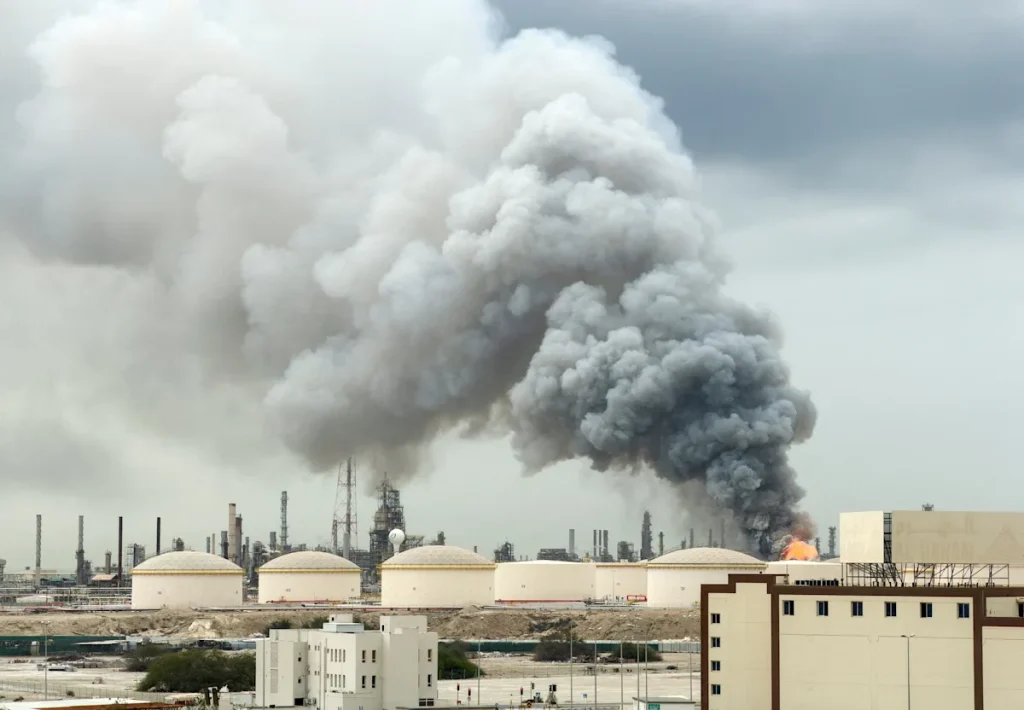
Iran’s attacks on key energy infrastructure continued over the weekend, including attacks on the BAPCO refinery in Bahrain and the headquarters of Kuwait’s state-owned Kuwait Petroleum Company.
Kuwait also reported attacks on several power plants and desalination plants in the country.
According to reports, an account close to Iranian parliament speaker Mohammad Bagher Ghalibaf posted on X on Saturday that if Iran “does not receive credible signals by tomorrow that Trump is reconsidering attacking Iranian infrastructure, it will preemptively and irreversibly target the Saudi and Israeli regimes’ power and oil production infrastructure on a large scale.”
“Iran has so far refrained from pursuing this option to avoid falling into ‘irreversible infrastructure war’ and ‘Ukrainization of the region,’ but the time for such restrictions will end in the next 24 hours,” the account wrote.
Meanwhile, oil market watchers digested signs that oil flows in the Strait of Hormuz, the world’s most critical oil chokepoint, may be partially restored.
Early Sunday morning, Oman’s foreign ministry announced that its leaders met with Iran’s foreign ministry on Saturday to discuss “possible options for ensuring smooth transit through the Strait of Hormuz given the current circumstances in the region.”
Also on Saturday, Iran’s military leadership said Iraqi ships would be allowed to pass through the Strait of Hormuz, which could bring about 3 million barrels per day of oil back to the market.
“The Strait of Hormuz will be opened when the losses caused by the war are compensated by revenue from transit fees,” Iran’s semi-official state-run Meir news agency quoted the Iranian president’s office as saying.
On Sunday, the Organization of the Petroleum Exporting Countries (OPEC+) agreed to increase its monthly production quota by 206,000 barrels per day in May, the same as the output quotas agreed by its members in April.