A new coronavirus variant is spreading across the United States that may be able to evade protection from current vaccines.
The variant, called BA.3.2, has been detected in nasal swabs from four U.S. travelers and clinical samples from five patients from four unidentified states. The substance was also found in three aircraft wastewater samples and 132 wastewater samples collected from more than 20 states, suggesting that its reach is actually much wider than scientists have seen so far.
BA.3.2 originates from omicron and was first detected in a Dutch traveler in South Africa in 2024 and in the United States in June 2025. The variant began to really surge in September 2025 and has since been reported in 23 countries.
Its evolution is similar to the variant BA.2.86 that emerged in 2024 and later evolved into JN.1: the main Covid variant of 2024. But researchers warned in a Centers for Disease Control and Prevention report that the new strain is “genetically distinct from the JN.1 lineage that has been circulating in the United States since January 2024.” Morbidity and Mortality Weekly Report.
This may require updating the current vaccine, which only targets subvariants of JN.1 and provides protection against the dominant variant in the United States.

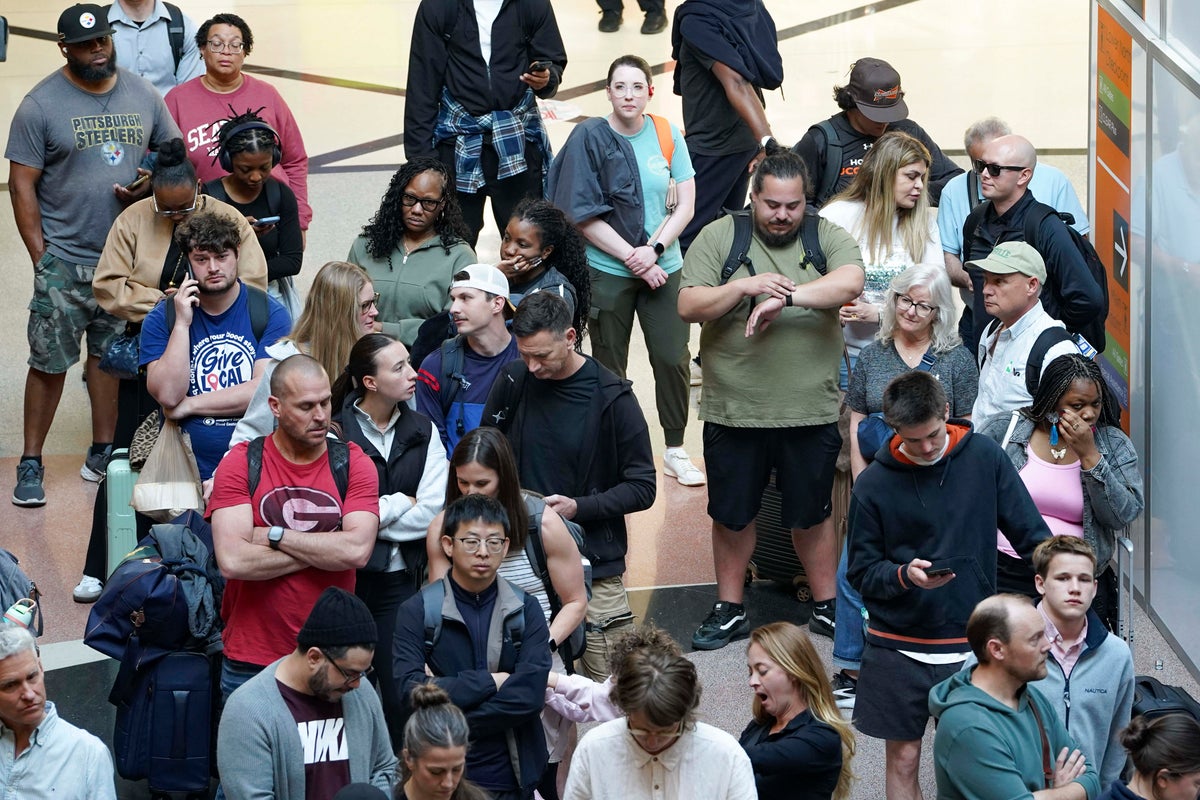
Samples from U.S. travelers and wastewater across the U.S. show a new coronavirus variant is spreading. Researchers say it may evade protection from current vaccines (Getty Images)
BA.3.2’s spike protein (the part of the coronavirus that allows it to enter human cells) carries about 70 to 75 genetic changes that make it easier for the virus to spread and evade immune protection.
Laboratory studies have shown that the new BA.3.2 strain can evade the body’s protective antibodies activated by the new coronavirus vaccine, “possibly due to mutations in the spike protein,” highlighting the need for more data on the vaccine’s effectiveness.
“The 2025-2026 LP.8.1-adapted mRNA Covid-19 vaccine showed protection against the current predominant JN.1 strain, but antibody neutralization against BA.3.2 was the lowest in laboratory studies of seven variants, potentially affecting the protection conferred by the vaccine,” the researchers said.
So how worried should Americans be?
BA.3.2 has been found in California, Connecticut, Florida, Hawaii, Idaho, Illinois, Maine, Maryland, Massachusetts, Missouri, New Hampshire, New Jersey, Nevada, New York, Pennsylvania, Rhode Island, South Carolina, Texas, Utah, Vermont, Virginia, Wyoming, Louisiana, Michigan and Ohio.
Nonetheless, the consequences of this variant of avoidance largely remain to be seen.
BA.3.2 is not one of the dominant Covid variants in the U.S., but other branches of the omicron are, according to CDC trackers. Reported cases are also no more severe than other infections.
The variant was detected in hospitalized patients in three unidentified US states in December and January.
The patients included two hospitalized older adults with other health problems (one of whom was hospitalized for heart disease) and a young child receiving outpatient care.
All patients survived, and the researchers said detection in hospitalized patients “does not necessarily indicate that the variant causes more severe disease, nor does it establish any association with risk factors.”

This chart from the Centers for Disease Control and Prevention shows COVID-19 death rates in the United States since the start of the pandemic in 2020. The data runs through the first week of the month (CDC)
Still, because COVID-19 is now considered a pandemic, the virus will continue to mutate, with dozens of variants currently circulating. They may not change that much, but scientists say we should still be prepared to adjust our responses accordingly.
“The virus is basically buying a few evolutionary lottery tickets every time it replicates,” Angela Rasmussen, a virologist at the University of Saskatchewan, told NPR last year.
“Most of them are losers. But sometimes it hits a winner,” she said. “So if people want to slow down this process, the key thing they should think about is: don’t give the virus more opportunities to replicate. Don’t let it buy any new lottery tickets.”
This year, other respiratory illnesses appear to be outpacing COVID-19 during the winter seasonal peak, including influenza and respiratory syncytial virus. Cases could rise again over the summer, following a steady influx of cases in the U.S. in the years since the pandemic began
Deaths from COVID-19 have fallen since last year. Therefore, a positive COVID-19 test should be followed by a trip to the emergency room to be checked for infection.
But thousands of people still died. CDC data shows that more than 3,600 people have died from COVID-19 so far this year.