


[As many of you know, I have a YouTube channel called Hardcore College Football History. I spend a whole lot of time these days researching college football history, mostly because I don’t have a social life and I need to spend time doing something or I’ll go insane.
I haven’t done much with Nebraska history, but there is a massive treasure trove of material. Material you probably never heard of. This is going to be one hell of a long offseason for Nebraska football fans. If you want to learn more about Nebraska football history, let me know.
Advertisement
The story below mentions Curtis, my hometown. I knew about Bill Glassford using the campus at Curtis for his practices. It was called Camp Curtis, and it had parallels to the Junction Boys of Paul Bear Bryant fame. Perhaps I should start here.
What do you think? – Jon]
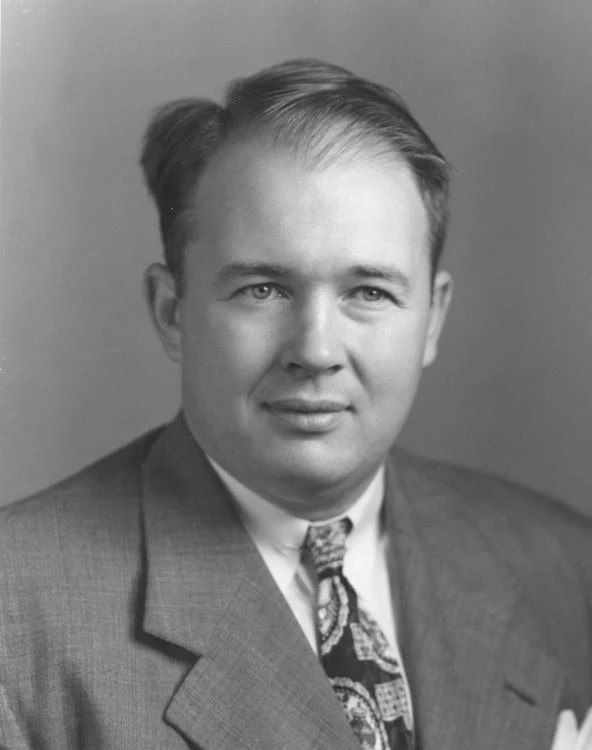
Bill Glassford and the 1954 Nebraska Player Rebellion
In January 1954, a dramatic act of collective disobedience took place in Lincoln, Nebraska. About 35 Cornhusker football players, more than half the roster, signed a petition calling for the resignation of head coach Bill Glassford. The story appeared in newspapers across the country. This clipping is from the January 15, 1954 issue of the Lancaster Eagle in Lancaster, Ohio.
The petition puts Nebraska’s football program at the center of the controversy, raising tough questions about player welfare, institutional power and what a tough coach really means.
Glassford came to Lincoln in 1949 with impressive credentials. He was a first-team All-American linebacker at Pittsburgh in 1936 and a member of the Panthers’ Rose Bowl championship team, coming to Nebraska after going 19-5-1 at New Hampshire from 1946 to 1948.
advertise
He got a solid contract worth a lot of money $12,500 per year, He made it clear from the beginning that things would go his way.
What he did was punishing by any measure. Preseason training camp is held in the remote town of Curtis, Nebraska, more than 200 miles from Lincoln, notorious for holding multiple practices a day in the sweltering heat.
His approach yielded results early on. The 1950 Cornhuskers posted their first winning record since 1941, driven by halfback Bobby Reynolds, who scored an astonishing 157 points that season. But the hard-working legions paid the price. Reynolds himself suffered a shoulder injury during training camp at Curtis the following year and never fully recovered.
By the end of the 1953 season, players’ frustration reached a breaking point. Signers of the petition outlined specific grievances: Injured players were forced to endure severe pain to play games, scholarships were withheld or revoked as a disciplinary tool, and Glassford banned players from signing up for classes that conflicted with their training schedules. These are not just complaints about hard work—they are accusations of abuse of the system. Players have spoken out about playing in “fear.”
advertise
The board actually asked Glassford to resign after hearing the players’ grievances. But the university found itself trapped by its own contract. The agreement it signed in 1949 was so tight that dismissal was nearly impossible without disastrous financial consequences.
The matter was settled, at least officially, in January 1954 when the president and board of trustees of the University of Nebraska gave Glassford a unanimous vote of confidence.
What happened next was one of the strangest outcomes in college football history.
Relations between Glassford and his players reportedly improved, and the 1954 Cornhuskers went 6-5 and finished second in the Big Seven. Oklahoma State was unable to play in the Orange Bowl due to the Big Seven’s “no duplication” rule, so Nebraska took their spot. This is only the second bowl berth in program history. Nebraska lost to Duke 34-7 in Miami, but its season has been saved.
advertise
Glassford coached for one more year before resigning after the 1955 season. “I’d had enough,” he later recalled simply. “I was exhausted.” He was 41 at the time. He never coached again.
Man, has Nebraska had this kind of impact on coaches throughout our history.