


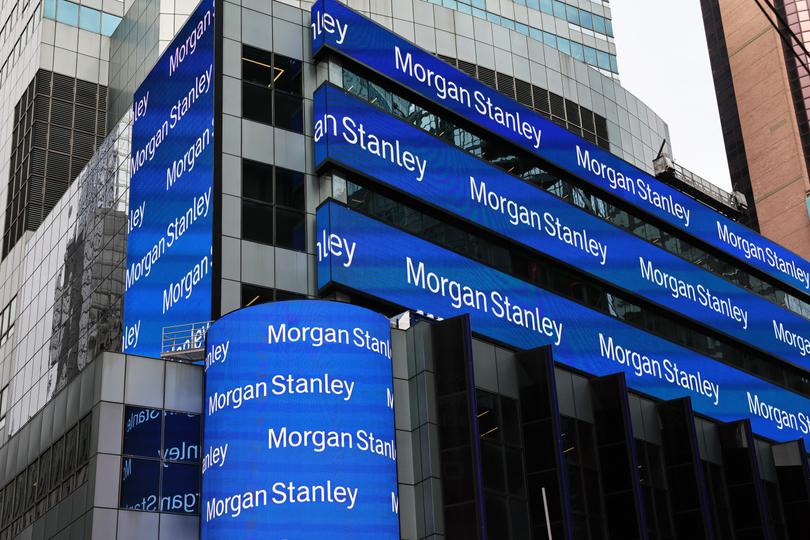
NEW YORK — Amy Oldenburg, head of digital asset strategy at Morgan Stanley (MS), dismissed the idea that Wall Street is only now embracing cryptocurrencies out of fear of missing out, arguing that big banks are only taking action after years of preparation.
“TradFi has been affected by FOMO and is now stepping in… which is really inaccurate,” Oldenburg said on Tuesday during a panel at the Digital Asset Summit in New York. “We have been working on the overall modernization of our financial infrastructure for many years.”
Her comments come as major U.S. banks, long seen as wary of cryptocurrencies or latecomers to the industry, are beginning to expand their offerings. For years, firms like Morgan Stanley limited their activities to indirect risks, such as offering wealthy clients the chance to acquire Bitcoin. funds.
Most recently, this has included a spot Bitcoin exchange-traded fund (ETF) on its E*Trade platform, and the bank even applied to launch its own spot Bitcoin ETF this month.
Wider participation has slowed due to regulatory uncertainty and concerns about custody, compliance and market structure. That stance has begun to shift, with Morgan Stanley now outlining a clearer digital asset strategy, with its efforts spanning trading, asset management and infrastructure.
Oldenburg said the bank is preparing to support tokenized stock trading on its alternative trading system.
“One of the things we plan to do in the second half of 2026 is to reverse our trajectory… to support tokenized equities later this year,” she said. The platform already handles stocks, ETFs and American depositary receipts (ADRs), which she described as a natural basis for expansion.
Within the company, transformation requires redesigning core systems. “We have to reteach ourselves what legacy infrastructure, pipes and pipelines look like,” Oldenburg said, noting the challenge of upgrading decades-old financial architecture to support faster settlements and ongoing trading.
She also highlighted the gap between crypto startups and large institutions.
“We need to insert a lot of other connection points around it,” she said, noting that founders often underestimate the complexity of the banking system.
Even so, areas such as stablecoins are gaining traction as a faster and cheaper way to move funds than traditional systems.
However, adoption depends on coordination across the financial system. “We cannot modernize on our own,” Oldenburg said. “This is an extremely complex, integrated global network.”
She said activity continues to increase despite token price weakness. “It’s really early days,” Oldenburg said, suggesting that deeper integration of Wall Street with cryptocurrencies may be gradual, but it’s underway.