


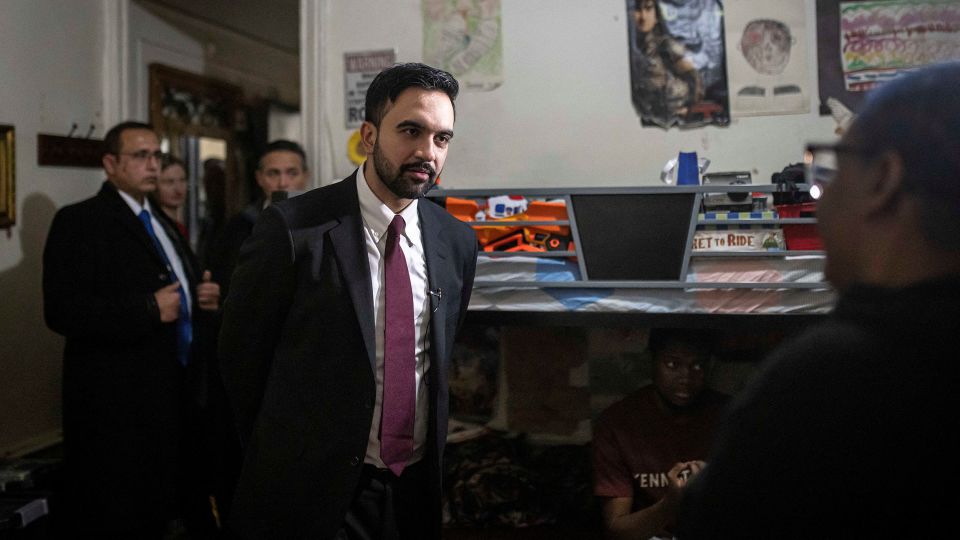
New York City Mayor Zohran Mamdani used executive powers to reverse several orders issued by his predecessor after he was indicted by the federal government, including one that expanded the definition of anti-Semitism and another that prohibited city employees and agencies from boycotting or divesting from Israel.
Mamdani signed the orders on Thursday afternoon, just hours after his inauguration at City Hall. As part of the move, he rescinded a directive signed by former Mayor Eric Adams after Sept. 26, 2024, the date Adams was indicted.
“This day marks a moment when many New Yorkers feel that politics means nothing to them,” Mamdani told reporters Thursday.
Adams denied any wrongdoing, and the Trump administration later tried to drop the charges against Adams, but a judge ultimately dismissed them.
Mamdani also signed additional executive orders Thursday regarding housing, an issue he focused on during the campaign.
The orders require the government to conduct an analysis of how to speed up housing development and establish an inventory of urban land that could be used for housing, with a report to be submitted by the summer.
Meanwhile, executive orders issued by Adams in his final days in office were seen by Mamdani’s supporters and some lawmakers as an effort to weaken Mamdani’s agenda.
It was also an opportunity for Adams to promote his support for Israel, in contrast to Mamdani, a fierce critic of the Israeli government. The 34-year-old democratic socialist has been on the radar of many Jewish leaders since his meteoric rise in politics began last year.
One of the rescinded orders blocked all city agencies from divesting from Israel, and another expanded the definition of anti-Semitism to match the International Holocaust Remembrance Alliance definition, which classifies some criticism of Israel as anti-Semitism.
Mamdani’s actions in the early days of the new government caused concern and criticism from some Jewish leaders. Israel’s Foreign Ministry accused Mamdani of inciting anti-Semitism in a social media post.
“On his first day as @NYCMayor, Mamdani showed his true colors: He rescinded the IHRA definition of anti-Semitism and removed restrictions on boycotts of Israel. This is not leadership. This is anti-Semitic gasoline on an open flame,” the ministry posted on X.
New York Civil Liberties Union Executive Director Donna Lieberman supported Mamdani’s move, saying Adams’ executive order “adopts a flawed and overly broad definition of anti-Semitism and prohibits city agencies from boycotting Israel.”
She also said the group supports his efforts to overturn another Adams-era executive order that allowed federal immigration authorities access to the city’s Rikers Island prison complex.
“This order violates New York City’s sanctuary laws, serves no legitimate public safety purpose, and is a gift to the Trump administration’s brutal deportation agenda,” Lieberman said.
As mayor, the New York City CEO has broad powers. While some orders can be seen as symbolic, they can also have wider effects through the thorough implementation of policies, the reorganization of municipal institutions, and the enforcement actions local governments must take.
Mamdani said he believed in Israel’s right to exist, but the Israeli government should not give preferential treatment to Jews and said equal rights should be guaranteed to all citizens. He is also a supporter of the Boycott, Divestment, Sanctions (BDS) movement, a global movement that calls for the use of non-violent tactics to support Palestinian human rights. While supporters see the movement as putting pressure on Israel, critics see it as anti-Semitic.
Mamdani did not completely revoke all of Adams’ orders targeting anti-Semitism. The city’s Office to Combat Anti-Semitism, created last May under Adams, will remain in place, but Mamdani is restructuring its structure, a common move under new administrations.
This story has been updated with additional information.
For more CNN news and newsletters, create an account at CNN.com