


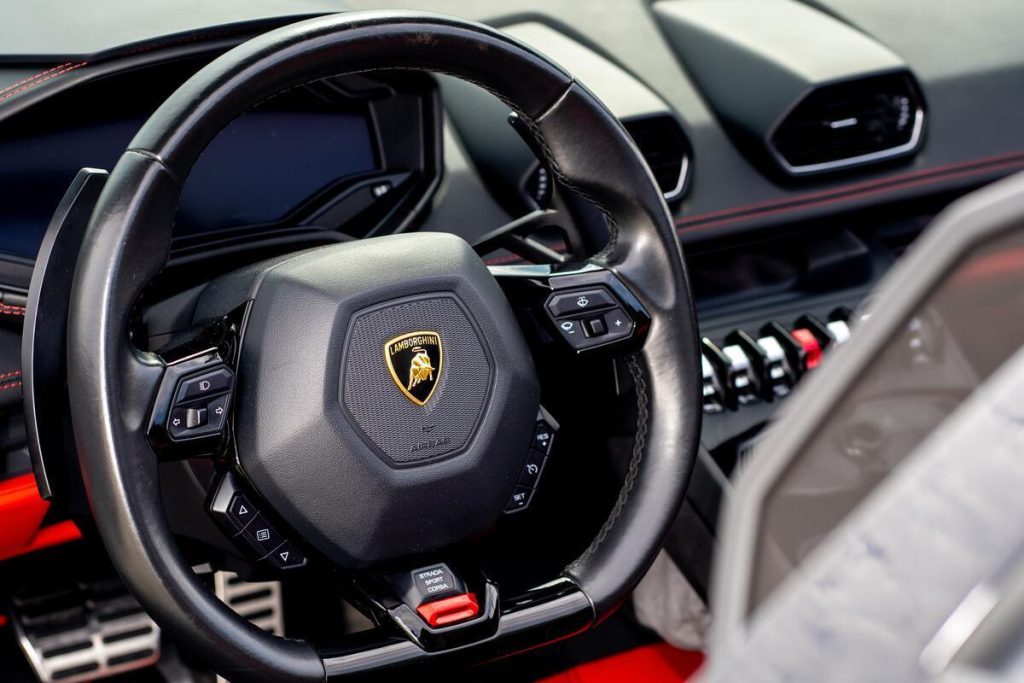
Automaker Lamborghini plans to deploy hybrid technology in its models in India by the end of 2024, a top executive said, as the Italian supercar maker aims to halve emissions from its cars in the next few years.
The niche player also expressed confidence that the country’s tax policy remains consistent, although any tax cuts would be welcome.
The company currently sells three models in the country – premium SUV Urus and two supercars, Huracan Tecnica and Aventador, with prices starting at a whopping Rs. 3 Crores.
“Our roadmap is that by the end of 2024, we will make the entire model range hybrid. So this year we will launch the first hybrid model, which is the new V12, and then in 2024, we will launch the Urus hybrid, and the new V10 which will also be a hybrid,” Lamborghini India head Sharad Agarwal told PTI.
He added that the company plans to launch a fourth model, an all-electric model, globally in 2028.
“The idea is to reduce vehicle emissions by 50% by 2025,” Agarwal said.
The company will bring the upgraded model globally and then in the Indian market as well.
Lamborghini started operations in India in 2007. Last year, the company sold 92 cars in India, a 33% increase from 69 cars in 2021.
When asked whether high tax rates on imported cars are affecting the growth of the Indian luxury car market, Agarwal said: “Today, the market is aligned with our existing tax structure… who doesn’t want reduction in tariffs… but that is not our priority…” Furthermore, he said, “In the past 5-6 years, we have seen the government having a constant tax regime and we always ask for that consistency. Once the segment is aligned with the structure, let the segment grow.” He said the government should maintain consistency in policies.
“We are not asking for reduction in taxes, but if it is reduced, who can say no,” Agarwal said.
Lamborghini imports its entire model range into India.
Currently, gasoline vehicles and diesel vehicles with an engine displacement of over 3,000cc and over 2,500cc imported as CBU (complete vehicle) with a CIF price of more than US$40,000 will be subject to a 100% tariff.