


-
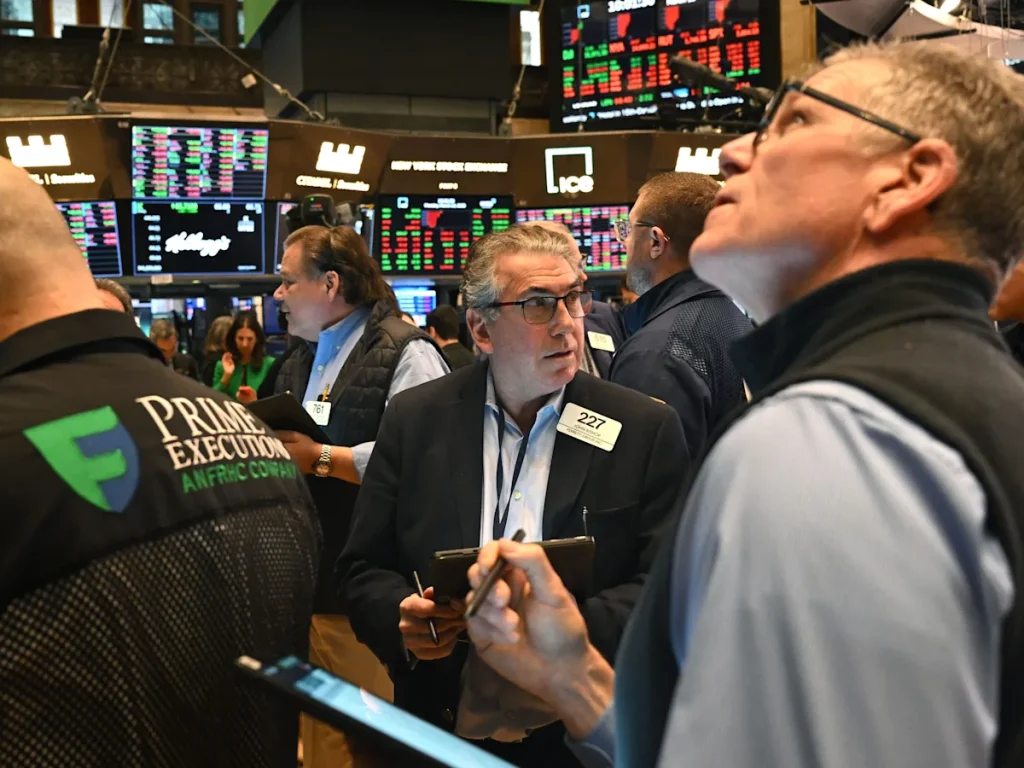
JPMorgan Chase believes that rising oil prices will have a “domino effect” that could cause the stock market to plummet.
-
The bank warned that oil prices staying above $90 a barrel could cause the S&P 500 to fall 15%.
-
The bank said the losses could spread to other markets and impact U.S. economic growth.
JPMorgan Private Bank said the S&P 500’s recent sell-off could intensify if oil prices don’t fall back.
Researchers at the bank said in a note to clients on Friday that they believed rising oil prices could trigger a “domino effect” in the stock market, in which as oil prices remain high, selling pressure on the stock market intensifies, and losses in the U.S. market spread around the world, ultimately hitting economic growth.
International benchmark Brent crude has been hovering around $100 a barrel this week as oil markets focus on supply disruptions in the Middle East.
The bank wrote that if oil prices remain above US$90 per barrel for a long time, it may trigger a correction of 10%-15% in the S&P 500 Index and have spillover effects on international and emerging markets.
“As prices rise to $120 a barrel or higher, the S&P 500 sell-off will intensify,” the bank’s executive director Kriti Gupta and senior market economist Joe Seydl said of how the domino effect could exacerbate stock market declines over time.
The domino effect could also continue and hit the U.S. economy, Gupta and Seidel said, noting that higher oil prices could hurt economic growth in two ways.
For one thing, Americans are already paying more at the pump. The national average price of a gallon of gasoline rose to $3.63 on Friday, 21% higher than when the U.S.-Iraq war began, according to AAA.
On the other hand is the wealth effect.
Americans may start to rein in their spending as they assess the hit to the stock market and the impact on their paper wealth. U.S. households held $56.4 trillion worth of stocks and mutual fund shares in the third quarter, according to the latest data from the Federal Reserve.
Overall, a 10% drop in the S&P 500 could reduce U.S. consumer spending by about 1%, JPMorgan estimates.
“Now, put this all together. The compounding effect of continued higher oil prices and a bear market in the S&P 500 has created a damaging demand effect that greatly exacerbates the hit to growth,” Gupta and Seidel said.
In the two weeks since the war with Iran began, markets have been worried about the broader impact of rising oil prices. The main concern is that rising crude oil prices could push up inflation while hurting economic growth. The pressures come at a time when the U.S. economy appears to be already slowing, leading some forecasters to raise recession forecasts this week, with the war in Iran the latest drag.
Read the original article on Business Insider