


Author: Sugiyama Satoshi, Komiya Kantaro
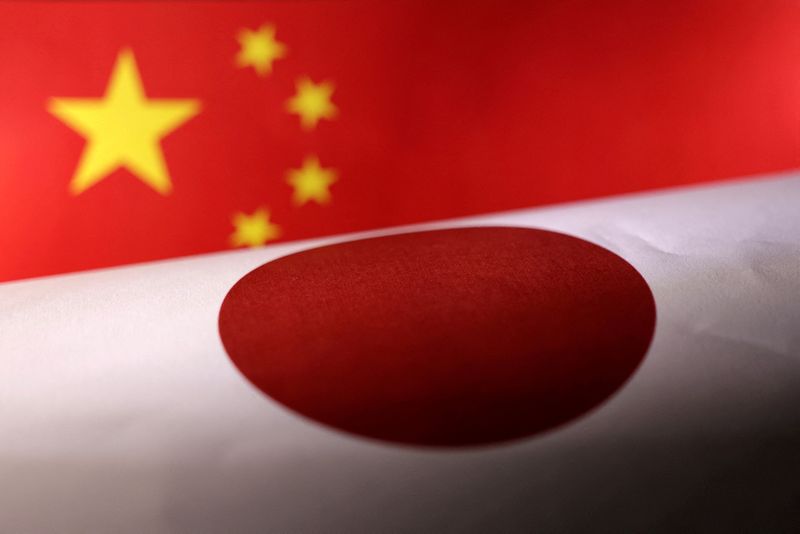
TOKYO, Jan 7 (Reuters) – Japan said on Wednesday China’s ban on its dual-use military exports was “absolutely unacceptable”, as a dispute between Asia’s two largest economies escalated and the threat of wider restrictions on vital rare earths loomed.
Dual-use items refer to goods, software or technology that have both civilian and military uses, including certain critical minerals necessary for manufacturing drones and chips.
Japanese Prime Minister Sanae Takaichi sparked the dispute late last year when he said China’s attacks on democratically governed Taiwan could be seen as an existential threat to Japan. China considers Taiwan part of its territory, which Taiwan denies.
Beijing asked her to retract her remarks but she failed to do so, triggering a series of countermeasures, the latest of which was a ban on exports on Tuesday to military users or any purpose that would help bolster Japan’s military capabilities.
The Japanese government’s top spokesperson and Chief Cabinet Secretary Minoru Kihara said: “Such measures that only target our country are very different from international practice, are absolutely unacceptable, and are deeply regrettable.”
At his daily news conference on Wednesday, he declined to comment on the impact this might have on Japanese industry, saying it was unclear exactly which projects would be targeted.
Japan’s Nikkei fell about 1% on Wednesday, bucking a trend that has seen U.S. and European benchmarks hit record highs.
Shares of major military contractors Kawasaki Heavy Industries and Mitsubishi Heavy Industries were among the biggest decliners, down about 2%.
Will rare earths be restricted next?
China Daily, a newspaper owned by the ruling Communist Party of China, said on Tuesday that Beijing was considering further restrictions on rare earth exports to Japan, citing people familiar with the matter.
The move could have wide-ranging implications for the manufacturing powerhouse, including its key automotive industry.
Japan has sought to diversify its supply of rare earths since China last restricted rare earth exports in 2010, but it still relies on China for about 60% of its imports.
Analysts say Japan is almost entirely dependent on China for some heavy rare earths, such as those used in magnets for electric and hybrid car motors.
Japanese automaker Subaru said it was monitoring the situation closely, while peers such as Toyota and Nissan had no immediate comment.
Similar to the 2010 dispute, a three-month restriction on China’s rare earth exports could cost Japanese companies 660 billion yen ($4.2 billion) and reduce annual gross domestic product by 0.11%, Nomura Research Institute economist Takahide Kiuchi said in a report on Wednesday.
He added that a one-year ban would reduce GDP by 0.43%.
Cameron Johnson, senior partner at Shanghai-based supply chain consultancy Tidalwave Solutions, said Tokyo would not stand idly by if Beijing’s ban did begin to target Japanese companies more broadly.
“If Japanese civilian or commercial entities are targeted, you may see the Japanese retaliate,” he said.
Such responses could target areas such as semiconductors or other high-end manufacturing materials needed for China’s own supply chains, he added.
China launched an anti-dumping investigation on Wednesday into imports from Japan of dichlorosilane, a key chemical for the semiconductor industry, the Ministry of Commerce said on its website.
Get ready for the long winter
Since Gao’s off-the-cuff remarks on Taiwan in early November, Beijing has urged citizens not to travel to Japan, stopped importing Japanese seafood and canceled conferences and cultural events.
U.S. President Donald Trump, who brokered a fragile trade war truce with Chinese President Xi Jinping late last year and plans to visit Beijing in April, has asked the market not to further escalate the dispute, sources told Reuters.
However, polls show the row does not appear to have damaged Takaichi’s strong popularity at home.
Analysts liken the rift to that sparked by Tokyo’s 2012 decision to nationalize the disputed islands, which sparked massive anti-Japanese protests in China and led to a 2-1/2-year suspension of meetings between the two leaders.
“I think this will continue for quite some time,” Keita Ishii, president of Itochu Corp, one of Japan’s largest trading companies, said in a television interview on Tuesday.
Asked about export restrictions to Japan at a regular news conference on Wednesday, a Chinese foreign ministry spokesman reiterated Beijing’s anger over Taiwan’s remarks.
“We urge the Japanese side to face up to the root of the problem, reflect on its mistakes, and retract its erroneous remarks.” Mao Ning said.
Later in the day, Japan’s Kyodo news agency reported that the Japanese government protested to China last week over signs of new offshore gas exploration activities in the East China Sea. Kyodo News said the activities were observed on the Chinese side of the middle line between the two countries.
Tokyo had previously lodged a similar protest with Beijing over a 2008 East China Sea natural resources development cooperation agreement.
Japan’s Foreign Ministry could not immediately comment on the Kyodo News report.
(1 US dollar = 156.6800 yen)
(Reporting by Satoshi Sugiyama, Kantaro Komiya, Tim Kelly, Rocky Swift, Daniel Leussink and Maki Shiraki, Kiyoshi Takenaka in Tokyo; Reporting by Liz Lee, Ethan Wang, Xihao Jiang, Shi Bu and Lewis Jackson in Beijing; Writing by John Geddie; Editing by Michael Perry and Clarence Fernandez)