


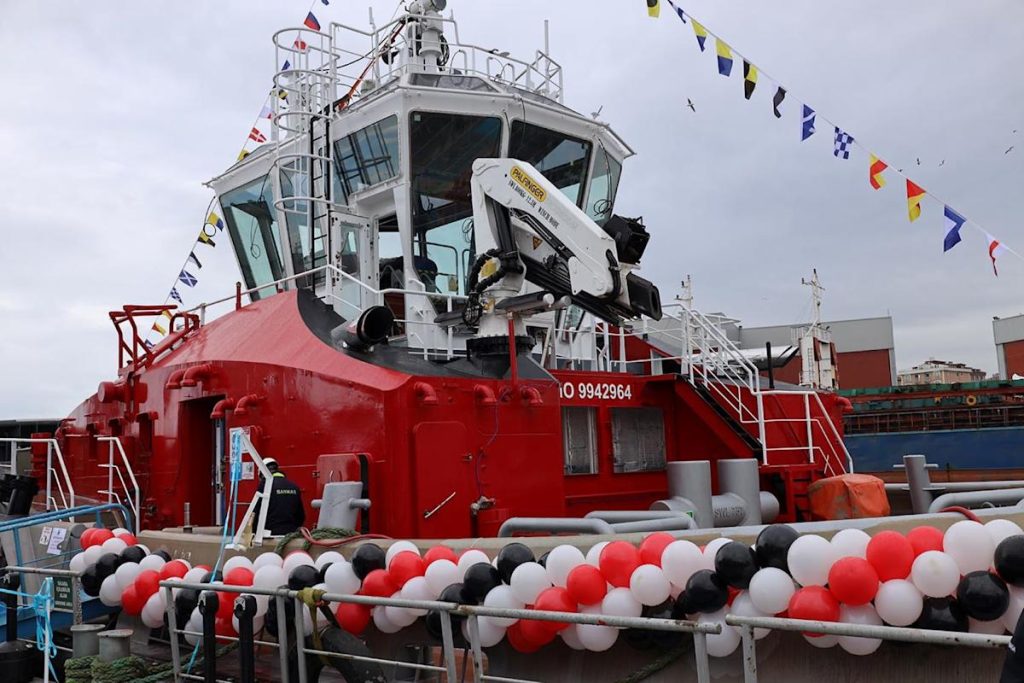
Today, all types of transportation are turning to electrification as people increasingly ditch gasoline-powered cars to save money on gas and reduce damage to the planet. The latest addition to the list is North America’s first electric tugboat, which was unveiled in Vancouver, Canada, in July.
The vessel, called HaiSea Marine, was built in a partnership between Vancouver shipyard Seaspan and the Haisla Nation, the tribal government of the indigenous Haisla people. The vessel was designed by shipbuilding firm Robert Allen Ltd. and built at a shipyard in Turkey, where a large number of the world’s tugboats are built, Vancouver Business reported.
A tug named “Sparky” (also known as an electric tug), believed to be the world’s first “full-size electric tug for ship handling,” entered service in New Zealand in June 2022.
The Haisla Nation has pushed Sispan to build zero-emission tugboats as part of negotiations to approve a new export terminal.
Not only is the HaiSea Marine more environmentally friendly than traditional gas-fired tugs, but the fact that it runs on electricity offers a range of other additional benefits. While traditional tugboats have two huge chimneys that emit polluting diesel exhaust, the HaiSea Marine doesn’t need them – so it has nothing to hinder its ability to see its surroundings, a crucial advantage for a tugboat.
“This is definitely a game changer,” Seaspan Marine Transport senior vice president Jordan Pechie told BIV.
“Visibility is everything,” Pecchia added. “Especially when you’re docking a ship, you need to see all the touch points, you need to see your crew, you need to see the lines.”
Additionally, the electric motors respond much faster than tug captains are accustomed to, allowing them to maneuver faster. Compared with diesel engines, electric motors produce 33% less underwater noise, thereby reducing disturbance to marine life.
Although the HaiSea Marine is the first of its kind and will cost more to build than a traditional diesel tug, Pechie estimates the break-even point will be reached in just eight years due to lower operating costs.
In the case of HaiSea Marine, a number of additional electric tugs are in production. In early December, the third such ship was delivered to Vancouver.
“This model is the future. This is the British Columbia model. For terminal contracts, electric tugs make a lot of sense,” Page said. “So it’s good to know that we’re not crazy. Smart people are copying us, which means we’re moving in the right direction.”