


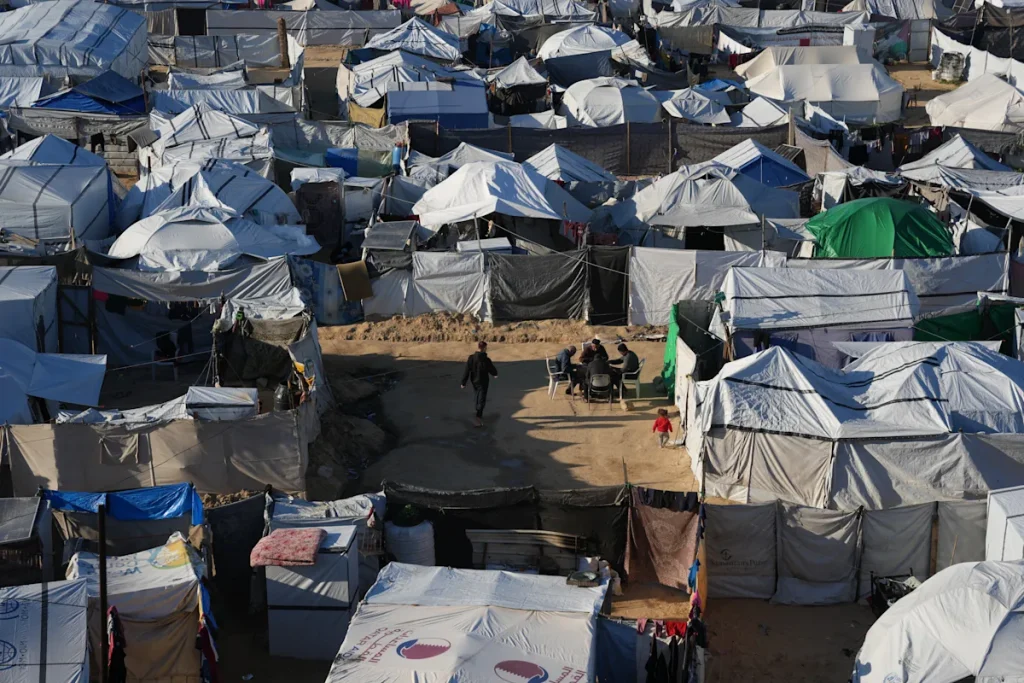
NAHARIYA, Israel (AP) — As the ceasefire enters a challenging second phase, the Israeli government is pushing back against the White House’s announcement that leaders will play a role in overseeing next steps in Gaza.
In a rare criticism of its close ally in Washington, Israel said the Gaza Executive Council “failed to coordinate with Israel and violated its policy” but gave no details. Saturday’s statement also said Prime Minister Benjamin Netanyahu had told the Foreign Ministry to contact Secretary of State Marco Rubio.
The committee announced by the White House on Friday does not include Israeli officials but does include Israeli businessman and billionaire Yakir Gabay. Other members announced so far include two of U.S. President Donald Trump’s closest confidantes, a former British prime minister, a U.S. general and representatives of several Middle Eastern governments.
The White House said the executive committee will realize the vision of Trump’s “Peace Council,” but its members have not yet been determined. The White House also announced the members of a new Palestinian council that will manage day-to-day affairs in Gaza under the supervision of an executive committee. The Palestinian Council holds its first meeting in Cairo on Thursday.
Executive committee members include Rubio, Trump’s special envoy Steve Witkoff, Trump’s son-in-law Jared Kushner, former British Prime Minister Tony Blair, Apollo Global Management CEO Mark Rowan, World Bank President Ajay Banga and Trump’s deputy national security adviser Robert Gabriel.
The committee also includes a diplomat from Qatar, an intelligence chief from Egypt and the foreign minister of Turkey – all ceasefire mediators – as well as a cabinet minister from the United Arab Emirates.
Türkiye has tense relations with Israel but good relations with Hamas and could play an important role in persuading the group to give up power and disarm. Hamas has said it will dissolve the Gaza government once a new Palestinian council is in place, but there has been no sign it will disband its military wing or security forces.
Netanyahu’s office did not respond to questions Saturday about his opposition to the executive committee.
Minutes after the announcement, Israel’s far-right National Security Minister Itamar Bengvir backed Netanyahu in a statement and urged him to order the military to prepare for a return to war. Finance Minister Bezalel Smotrich, another far-right ally of Netanyahu, said on social media that “those countries that keep Hamas alive cannot possibly replace it.”
Palestinian Islamic Jihad, Gaza’s second-largest militant group after Hamas, also expressed dissatisfaction with the composition of the Gaza Executive Council in a statement on Saturday, claiming it reflected Israeli “specs.”
The Trump administration said on Wednesday that a U.S.-drafted ceasefire plan for Gaza is now entering its second phase, which includes establishing a new Palestinian council in Gaza, deploying international security forces, disarming Hamas and rebuilding the war-torn territory.
The last hostage was Gaza’s Ran Gvili, who was killed in the attack that sparked the war. His parents, Talik and Itzik Gvili, said in a statement on Saturday that they were “deeply concerned about the steps being taken to rebuild Gaza” and that Hamas had not fulfilled its obligation to repatriate everyone.
A ceasefire in the deadliest war ever between Israel and Hamas came into effect on October 10. The first phase focuses on the return of all remaining hostages in exchange for the release of hundreds of Palestinian detainees, along with increased humanitarian aid and a partial withdrawal of Israeli troops from Gaza.
The war began with a Hamas-led attack on southern Israel on October 7, 2023, which killed about 1,200 people, mostly civilians, and took more than 250 hostages. Israel’s retaliatory offensive has killed more than 71,400 Palestinians, including more than 460 since the ceasefire began, according to Gaza’s health ministry.
The ministry, which is part of the Hamas government, keeps detailed casualty records that U.N. agencies and independent experts consider generally reliable.
___
Associated Press writer Sally Abou AlJoud in Beirut contributed.
___
For more AP coverage, visit https://apnews.com/hub/israel-hamas-war