


Worried about the AI bubble? Subscribe to The Daily Upside for smart, actionable market news created just for investors.
Export 12.8 million tons of liquefied natural gas in three to five years, with annual revenue of approximately US$20 billion. The night passed.
Qatar Energy Chief Executive Saad Al Kaabi told Reuters on Thursday that the destruction of 17% of Qatar’s globally important liquefied natural gas export capacity in an Iranian attack was beyond his “wildest dreams”. Consultancy MST Marquee has warned that escalating attacks on energy infrastructure in the Persian Gulf are pushing the world towards a “doomsday gas crisis scenario”.
Sign up for Daily Up for free and get premium analysis on all your favorite stocks.
Also read: Want to bet? MLB names Polymarket as official prediction markets partner and Uber signs $1.25 billion deal with Rivian Robotaxis
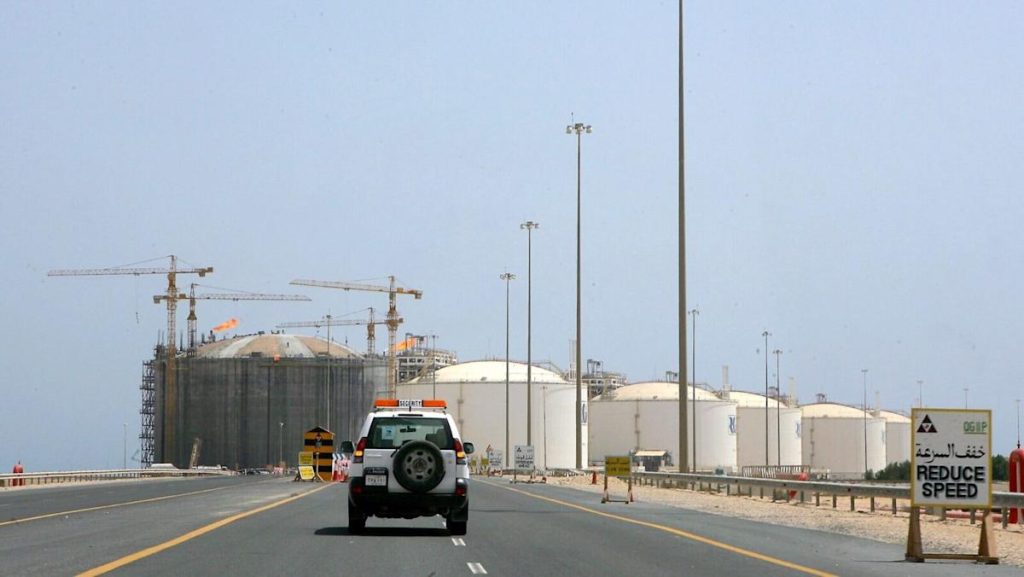
Iran earlier on Thursday carried out a missile attack on Qatar’s Ras Laffan plant, the largest liquefied natural gas production facility on Earth, in retaliation for an Israeli attack on Iran’s South Pars gas facility. Kaabi said the state-run company would be forced to declare force majeure for up to five years on long-term LNG export contracts with Belgium, China, Italy and South Korea due to “extensive damage” to Qatar Energy. This will lead to major buyers in Asia and Europe aggressively looking to replace large lost volumes, creating long-term price pressure as these buyers compete for LNG elsewhere. Higher prices, in turn, will fuel inflation and hit particularly hard the world’s largest net importers, mainly in Asia and Europe. In Europe, benchmark Dutch natural gas futures rose 11.6% on Thursday to 60.99 euros ($70.48) per megawatt hour.
Qatar is the world’s second-largest LNG exporter, so it stands to reason that the No. 1 U.S. producer has room for upside:
-
Last year, U.S. natural gas production reached a record 118.5 billion cubic feet per day (Bcf/d), about 20% of which was exported. Shares of Cheniere Energy, the largest U.S. producer, rose 5.9% on Thursday. For domestic consumers, U.S. natural gas prices have been relatively flat since the Iran conflict began, in part because the United States produces nearly all the gas it consumes.
-
U.S. LNG export terminals are now operating near full capacity, according to the U.S. Energy Information Administration, so while U.S. producers will benefit from higher export revenues, the country is unable to offset the global supply shock. The Federal Energy Regulatory Commission predicts that U.S. export capacity will expand significantly in the next few years, increasing by 35 Bcf/d.
Joint ventures and unfortunate events: The next major U.S. export facility scheduled to come online is the Golden Pass LNG terminal, a joint venture between ExxonMobil (30% stake) and (ironically) Qatar Energy (70% stake). As it happens, ExxonMobil also has a stake in the facility that was damaged in Qatar on Thursday.
This article first appeared on The Daily Upside. For incisive analysis and perspective on finance, the economy and markets, sign up for our free The Daily Upside newsletter.