


trade off
As turbochargers and other advanced engine technologies become more common, newer vehicles often offer measurable gains in efficiency, emissions and performance over their predecessors. However, YouTuber speedkar99 believes that this added complexity may come at the expense of long-term reliability, a claim he backs up by tearing down Honda’s R18 engine.
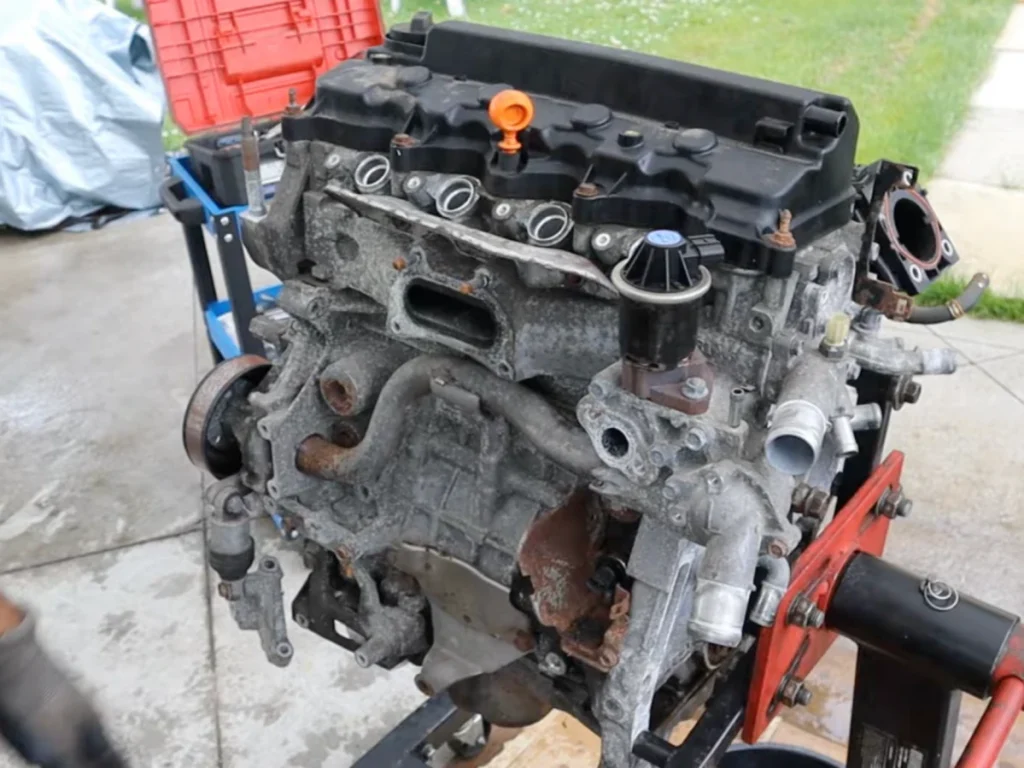
The R18 is a 1.8-liter naturally aspirated inline four-cylinder engine used in the eighth and ninth generation Honda Civics. It’s also noteworthy because it was the last non-turbo Civic engine before the tenth-generation model debuted in North America in 2015, introducing turbocharging into the mainstream lineup. The engine being disassembled is from a 2012 Civic that has accumulated approximately 210,000 kilometers (130,489 miles), and its main problem can be traced to a leaking cylinder head gasket.
Honda R18 interior
According to speedkar99, the appeal of the R18 lies in its simplicity. The engine uses plastic valve covers and intake manifold and relies on port fuel injection rather than the direct injection system common in newer engines. With port injection, fuel is injected into the intake, allowing gasoline to flush the intake valves and help prevent carbon buildup. In contrast, direct injection injects fuel directly into the combustion chamber, which can increase power and efficiency but can also lead to carbon buildup over time.
The R18 is also equipped with the economy-focused i-VTEC system. Unlike performance-oriented Honda engines, this setup doesn’t rely on aggressive valve lift changes. Instead, it prioritizes efficiency and smooth operation, reducing the risk of wear-related damage.
After removing the cylinder head, speedkar99 found burn marks on the head gasket between cylinders two and three, confirming the part failure. The leak allows coolant to mix with combustion gases, reducing the engine’s ability to regulate temperature, as low coolant levels directly impact cooling performance. However, he blamed the failure on a prolonged overheating issue that the driver had not addressed, rather than an inherent design flaw.
The rest of the engine components, such as the oil pan, crankshaft and connecting rods, are in good condition. However, minor wear and tear, such as carbon buildup on the piston crown, is largely unavoidable in an engine with about 130,000 miles on it.


speedkar99 on YouTube
Long live North America
In his conclusion, speedkar99 cites the R18’s lack of turbocharging, simple design, and use of port injection as key factors in its durability. In contrast, some modern turbocharged engines have faced reliability issues early on, including the 3.5-liter twin-turbo V6 found in the third-generation Toyota Tunas, which has been linked to reports of premature engine failure.
Across Honda’s lineup, the current 11th-generation Civic continues the turbocharged approach, while hybrid models (using a dual-motor setup) add further complexity, increasing the number of components that can fail over time.

speedkar99 on YouTube
View 4 images from this gallery in the original article
This article was originally published by Autoblog on December 23, 2025 and first appeared in the News section. Click here to add Autoblog as your preferred source.