


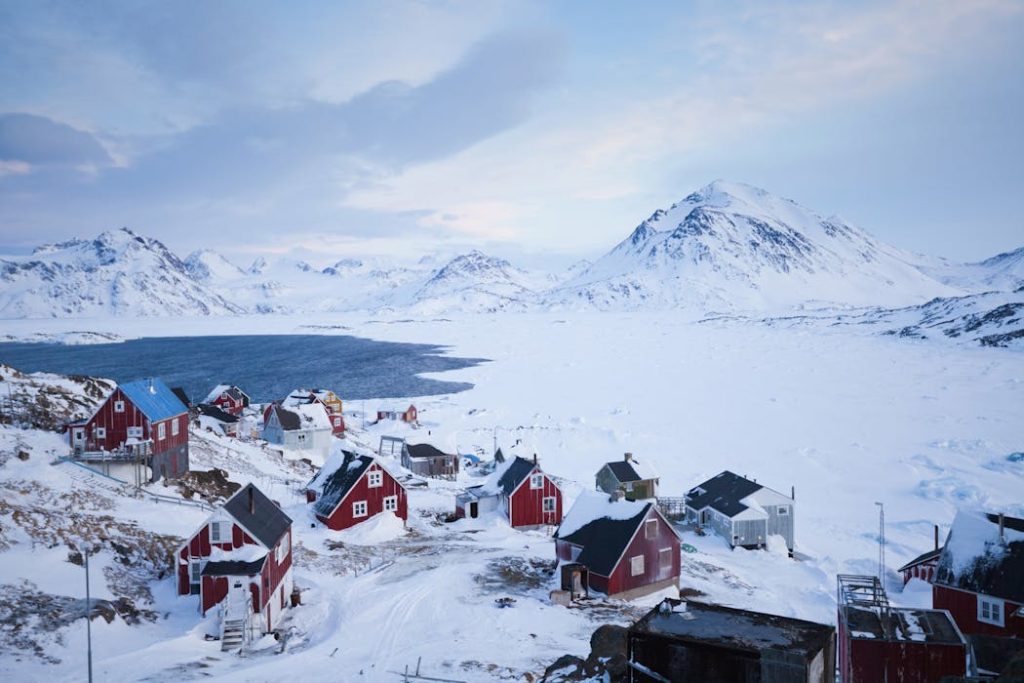
Since Donald Trump returned as US president, he has been talking about taking over Greenland. He insists the United States will take control of the island, which is currently an autonomous Danish territory, and may seize Greenland by force if his offer is rejected. In early 2026, the idea reappeared in the news, drawing international condemnation.
When Congress held hearings on Greenland’s importance to the United States in 2025, senators and expert witnesses focused on the island’s strategic value and its natural resources: critical minerals, fossil fuels and hydroelectric power. No one mentions the dangers that those who aspire to own and develop the island will inevitably encounter, many of which are exacerbated by human-induced climate change.
This is imprudent because the climate in the Arctic is changing faster than anywhere else on Earth. Such rapid warming further increases already huge economic and personal risks for people who live, work and extract resources in Greenland and elsewhere on Earth.


I’m a geoscientist who studies the environmental history of Greenland and its ice sheet, including natural disasters and climate change. This knowledge is critical to understanding the risks to military and extractive activities in Greenland today and in the future.
Greenland: a land of extremes
Greenland is different from where most people live. The climate is cold. Sea ice clings to the coast most of the year, making it inaccessible.
An ice sheet up to 2 miles thick covers more than 80% of the island. The population of approximately 56,000 people lives along the island’s steep, rocky coastline.
While researching my book, When the Ice Disappears, I discovered how Greenland’s harsh climate and vast wilderness had thwarted past colonization efforts. During World War II, dozens of U.S. military pilots crashed on ice fields when they became disoriented in thick fog and ran out of fuel. In 1912, an iceberg in Greenland sank the Titanic, and 46 years later, another iceberg sank a Danish ship designed to withstand ice and snow, killing all 95 people on board.
Now, climate change is exacerbating natural disasters, making resource extraction and military operations in Greenland uncertain, expensive and potentially deadly.
rock and roll on the move
Greenland’s coastal landscape is prone to rockfalls. The danger arises because the coast is where people live and the rocks are not hidden under ice sheets. In some places, this rock contains critical minerals such as gold, as well as other rare metals used in technology, including for circuit boards and electric car batteries.
The unstable slopes reflect how ice sheets erode deep fjords as they grow larger. Now that the ice has melted, there is nothing to support the nearly vertical valley walls, so they collapse.
In 2017, a mountainside in northwestern Greenland plunged 3,000 feet into the deep waters of a fjord. Moments later, a wave (tsunami) created by the rockfall swept through the nearby villages of Nuugaatsiaq and Illorsuit. Water filled with icebergs and sea ice tore houses from their foundations, sending people and sled dogs running for their lives. By the time it was over, four people were dead and both villages were in ruins.
The steep fjord walls surrounding the island are littered with traces of past rockfalls. Evidence suggests that at one point in the past 10,000 years, one of the slides dropped enough rock to fill 3.2 million Olympic swimming pools with the water below. In 2023, another rockfall triggered a tsunami that rocked back and forth in a Greenland fjord for nine days.
Greenland has no paved road network. The only viable way to transport heavy equipment, minerals and fossil fuels is by sea. Piers, mines and buildings within tens of feet of sea level are vulnerable to tsunamis caused by rockfalls.
Melting ice would be deadly and expensive
Anthropogenic global warming caused by the burning of fossil fuels has accelerated the melting of Greenland’s ice. This melting is threatening the island’s infrastructure and the way of life of local people, who have adapted their transportation and food systems to the presence of ice and snow for thousands of years. Most recently, record floods caused by rising temperatures causing ice caps to melt, washed away bridges that had stood for half a century.
As the climate warms, the permafrost (frozen rock and soil) beneath the islands will melt. This destabilizes the landscape, weakens steep slopes and damages critical infrastructure.
Melting permafrost has threatened U.S. military bases in Greenland. When the ice melts and the ground beneath the runway sinks, cracks and craters can form, which is a hazard for aircraft. The buildings tilted as their foundations sank into softening soil, including key radar installations that have scanned the skies for missiles and bombers since the 1950s.
Greenland icebergs could threaten oil rigs. As climate warming accelerates the flow of Greenland’s glaciers, they are calving more icebergs in the ocean. The problem is worse near Greenland, but some icebergs are drifting toward Canada, endangering oil rigs there. The ships are ready to tow away the threatening iceberg.


The Greenlandic government banned fossil fuel extraction in 2021 due to environmental concerns. Yet Trump and his allies remain eager to see exploration resume on the island, despite unusually high costs, subpar initial drilling results and the ever-present risk of icebergs.
As Greenland’s ice melts and water flows into the ocean, sea levels change, but in ways that may not be intuitive. Sea levels away from the islands rise about an inch every six years. But close to the ice sheet, land is rising. Rocks beneath Greenland, long weighed down by the massive ice sheet, are gradually shaking off the weight of the ice and starting to rebound. This rise is rapid—more than 6 feet per century. Soon, many of Greenland’s ports may become too shallow for ships.


Greenland’s challenging past and future
History clearly shows that many past military and colonial efforts failed in Greenland because they paid little regard to the island’s harsh climate and dynamic ice sheets.
Climate change forced Nordic settlers to leave Greenland 700 years ago. Explorers trying to cross the ice cap died in the cold. U.S. bases built within the ice sheet, such as Camp Century, were quickly destroyed by the deformation of ice and snow.
In the past, the United States has focused on short-term interests in Greenland, with little regard for the future. The abandoned World War II-era U.S. military bases scattered around the island in need of cleanup are one example. The forced relocation of Inuit communities in Greenland during the Cold War is another example. I think it is equally short-sighted for Trump to ask the United States to take control of the island today to develop its resources.

However, when it comes to the habitability of the planet, I believe that Greenland’s greatest strategic and economic value to the world is not its location or natural resources, but its ice. White snow and ice reflect sunlight and keep the Earth cool. Ice caps on land keep water out of the ocean. As Greenland’s ice sheet melts, global sea levels will rise, reaching about 23 feet when all the ice is gone.
Climate-driven sea level rise is already inundating coastal areas around the world, including major economic centers. As this continues, losses are estimated to total trillions of dollars. Unless Greenland’s ice remains frozen, coastal flooding will force the largest human migration in history. Such changes are expected to destabilize the global economy and strategic world order.
These examples show that ignoring the risks of natural hazards and climate change in Greenland can lead to local and global disasters.
This article was originally published on February 19, 2025, and has been updated to reflect new U.S. concerns about Greenland.
This article is republished from The Conversation, a nonprofit, independent news organization that provides you with facts and trustworthy analysis to help you understand our complex world. Author: Paul Bierman, University of Vermont
Read more:
Paul Bierman receives funding from the National Science Foundation and the Gund Environmental Institute at the University of Vermont