


ATLANTA (AP) — Georgia’s child welfare system is in crisis as the state’s Department of Family and Children Services faces a projected shortfall of up to $85.7 million.
Candice Broce, commissioner of the Department of Human Services and director of the child welfare agencies overseen by the department, instituted a series of cost-saving measures in November that mean fewer visits between children and parents needed for family reunification, less time for aides to help foster parents care for children with complex needs, and the need to postpone juvenile court dates when children do not have transportation to the court.
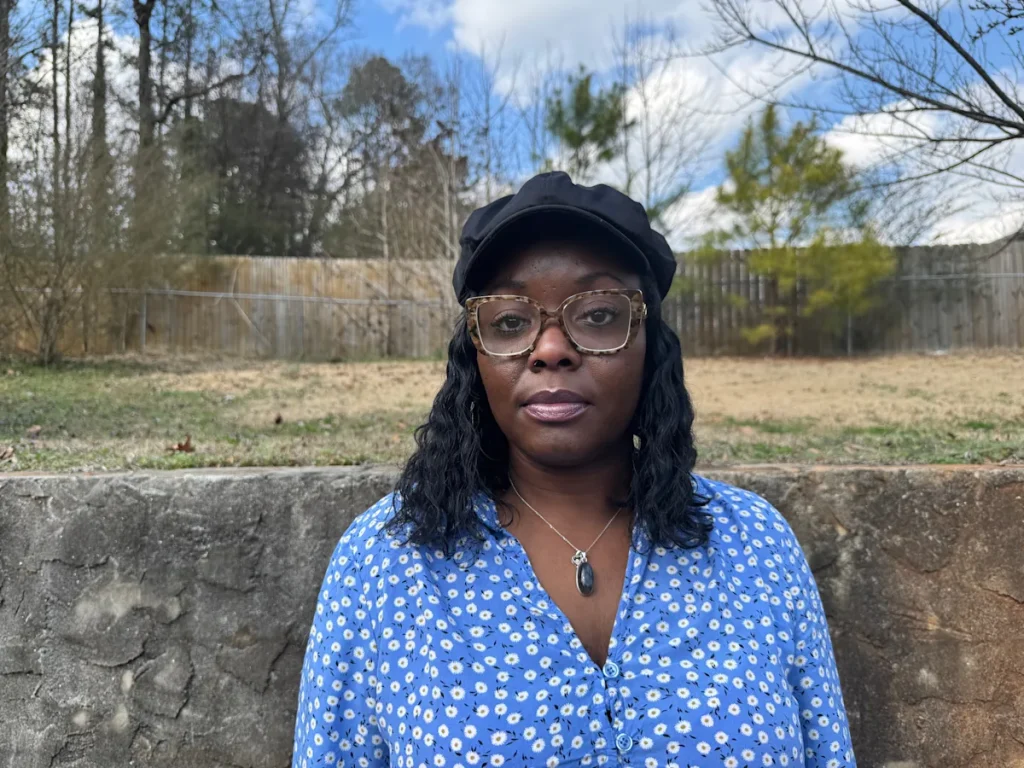
“I’m stuck. I’m stressed out. Emotionally, I’m exhausted,” said Pamela Bruce. She said her adopted son “can’t thrive in survival mode” and also worries she will send him back as services are reduced.
Georgia lawmakers voted to close budget gaps, but families have already lost months of service and delays are likely to continue. Some lawmakers view the influx of cash as a Band-Aid and want an audit to determine why the system collapsed.
While experts say the size of the projected deficit is unusually large, Georgia’s child welfare agencies are not the only ones in trouble. One of the problems facing the Georgia system — an influx of children with severe behavioral challenges — is a national problem. Burrows has been praised for reducing the number of children with complex needs staying in hotels, a troublesome practice that many states have adopted as a remedy. Finding places and people to care for children with such high needs is expensive.
Observers say the deficit could be caused by a variety of reasons. In an effort to control the deficit, Broce, a longtime ally of Republican Gov. Brian Kemp, terminated contracts with service providers she deemed underperforming and in November required contracted services to first be approved by the state. Providers, families, attorneys, legislators, placement agencies and others across the state say few service referrals are being made and describe a system that has slowed dramatically.
“Every day families or children don’t get the support they need, it’s only going to get more complicated,” said Ann Flagg, director of the Office of Family Assistance at the National Association of Counties, an advocacy group and a former member of the Biden administration.
Burrows said in a statement to The Associated Press that service requests “are approved within hours” unless we request more information. Contract services include providers of transportation, counseling, assessments, behavioral aides, and more.
Child welfare agencies are a critical lifeline for children in crisis. It is part of the larger state Department of Human Services, which has a budget of $1.06 billion this year. Its mission is to find ways to protect children, heal their families when possible, and then find a way to reunite them. The state’s Department of Family and Children’s Services employs approximately 7,500 people.
During a legislative hearing, she said the agency does not have enough resources to handle the “vast” behavioral and mental health services needed by the children in its care. To tighten the budget, she said, she tried to limit services only to those that were duplicative, unnecessary or could be paid for by the state’s federal Medicaid health insurance program.
“I was forced to make a decision that no one wanted to make,” Burrows told lawmakers.
Even with these cost-cutting measures, the deficit is expected to be just under $49 million.
Service has slowed down
“How on earth are we going to reunite families if we don’t have services in place?” said family attorney Jessica Hall.
Burrows said in a statement that the possible request “has not been escalated to the state office for review.”
Bruce’s adopted son wrote to his caseworker that he developed a “brotherly relationship” with the behavioral aide that the teen never had when he was running around the house. That relationship ended last fall when the Behavioral Assistant’s services were no longer funded.
The son wrote that he was “upset” by not being able to go to school with his friends due to lack of transportation. He also noted Bruce’s loss – she now struggles to pay her bills because she took Uber rides for him to visit family and stayed home to care for him. She was determined not to let him into a group home.
Burrows said the agency, with judicial involvement, has gradually reduced services such as behavioral assistance for youth who may be self-sufficient. She also said she’s trying to avoid “cookie-cutter” case plans that don’t fit the needs of individual families.
Brittney Kleuger, CEO of Family Menders, which provides services such as transportation, counseling and behavioral aides in northwest Georgia, said at a recent hearing that before the November process change, her agency was receiving 80 to 100 referrals a week. Now, they receive less than 10 emails a week.
In calls with DFCS, providers questioned Broce’s assertion that services were quickly approved and asked whether DFCS would still contract with them. Kristen Toliver, the agency’s director of service delivery, said “the approval process is going to be different” going forward, but that the approval process has been relaxed for some services.
web of causes
Burrows said the department has lost more than 800 beds for children since 2019 and there is a shortage of available beds in psychiatric hospitals. Transportation and behavioral aides are expensive, she said. Burrows said she is also working to reduce how often the department pays for services that Medicaid should cover.
Burrows has had a long-standing conflict with judges, who she says often require unnecessary services or relocations, increasing costs. Judge Nhan-Ai Simms testified before lawmakers in 2023 that Burrows violated state law by asking the judge to improperly house some children with mental and behavioral problems in juvenile detention centers. He disagrees.
“I think there are very few cases where the court has made an order that went beyond what DFCS recommended,” Sims said.
Changes in federal law make it harder for Georgia and other states to use federal child benefit funds.
“Budget instability, in my opinion, just points to an inadequate long-term fiscal strategy,” said Melissa Carter, executive director of Emory University’s Barton Center for Child Law and Policy, adding that states should invest more in keeping families together in order to draw down federal funds.
Some lawmakers were not satisfied with Burrows’ explanation.
“I’ve worked in the budget field a long time and I’ve never seen a deficit like this,” said Democratic Rep. Mary Margaret Oliver. “I don’t think we can blame the providers for this. I think it’s a management issue.”
Juanita Stedman, a former juvenile court judge and executive director of Together Georgia, disputed that the funding shortfall was Burrows’ fault.
“Historically, we haven’t paid for the complexity of our children,” she said.
Whatever the cause, Bruce fears the deficit could blow up again. She said she had never felt so lacking in support from DFCS in the two and a half years she had fostered her children, but what really broke her heart was seeing her foster son miss his family more often.
“My visit was very important to me because I truly love my family,” he wrote.
___
Cramon is a corps member for the Associated Press/Report for America Statehouse News Initiative. Report for America is a nonprofit national service program that places journalists in local newsrooms to report on undercovered issues.