


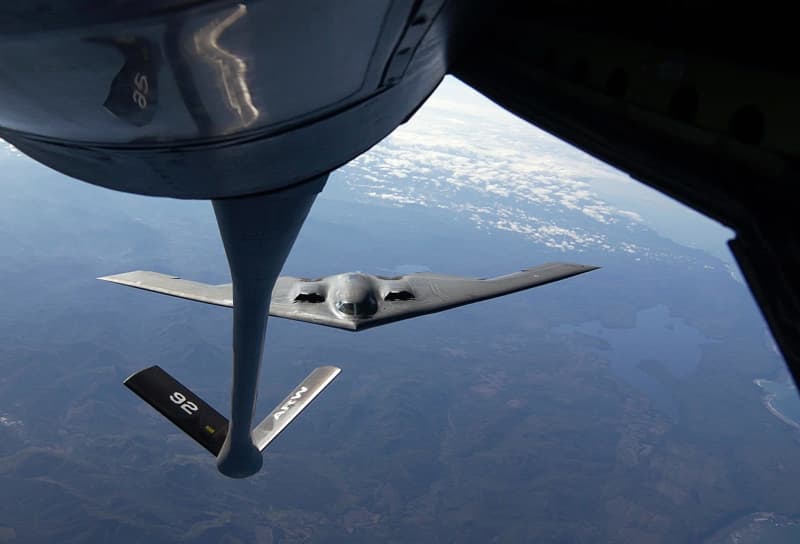
A former Central Command official told the Washington Post that the first wave of attacks on Iran would likely focus on strategic missile bases and launchers, which represent the most direct threat to U.S. forces and Israel.
Retired Lieutenant General Bob Harward, former deputy commander of the U.S. Central Command, said that the large-scale accumulation of U.S. military assets in the Middle East is not only a show of force, but also a signal that the United States has the ability to dismantle the power structure of the Iranian regime in a matter of hours.
“One of the things he stated was [President Donald] Trump means what he says,” Harward said jerusalem postciting the United States’ withdrawal from the Joint Comprehensive Plan of Action and its position that it will not tolerate a nuclear-armed Iran. “Now he has deployed assets for military operations,” Harward said.
“He is willing to go beyond mediation and take action if he is unable to achieve his goals regarding nuclear weapons and ballistic missile programs.”
If a strike is ordered, Harward, who served as Central Command deputy commander until 2013, detailed a series of goals aimed at degrading Iran’s offensive capabilities while sparing civilians. The former commander said priorities will be “from the bottom up.” The first wave of attacks will target strategic missile sites and launchers – a direct threat to U.S. forces and Israel.


Bob Harward, former deputy commander of U.S. Central Command. (Source: Courtesy)
The second priority is to eliminate remaining proxies abroad that pose a risk of retaliation to Israel.
US may attack Islamic Revolutionary Guard Corps headquarters
The most significant strategic shift, however, involves the regime’s internal control of power. Harward suggested that the campaign would target the Islamic Revolutionary Guard Corps (IRGC) and the tools used to oppress the Iranian people, rather than state infrastructure.
“You don’t think about infrastructure,” Harward explained. “This is about getting the Iranian people to change their government, so I don’t think those types of targets will be hit. It will only focus on things that enable the regime and the IRGC to suppress the people.”
Perhaps the most chilling warning for Tehran was Harward’s description of America’s modern warfare capabilities, which he noted were far superior to the wars in Iraq and Afghanistan. “Because of what we’ve learned and the technologies we’ve been able to develop – whether it’s command, control or targeting – it can make your large-scale strikes more effective,” Harward said.
“Where before we could have 40 or 50 strikes a day, now we have the capacity to have hundreds of strikes a day. That in itself completely changes the situation for the regime.”
Harward elaborated that the United States now has the ability to crush the IRGC command structure with overwhelming speed. “If you were targeting the Islamic Revolutionary Guard Corps and wanted to destroy all their headquarters and facilities, you could probably do it in a matter of hours. That’s unprecedented.”
Harward’s perspective was shaped not only by his military service but also by his personal experiences. His family lived in Iran from 1968 to 1979, where he attended the U.S. Naval Academy just weeks before the shah’s fall.
Looking back on the 1979 revolution, Harward noted that the turning point came when the military shifted from supporting the king to supporting the people. He believes a similar dynamic is key to any future changes in Tehran. “This regime has oppressed people for 47 years,” he said. “Most of them want change.”
He stressed that any military action must be consistent with supporting the Iranian people and ensure that the target list reduces the regime’s ability to communicate and suppress dissent without alienating the public.
“I don’t think anyone really understands the scale or capability that we have because no one has seen it before,” Harward said, sounding a warning to other global powers. “If it does happen, it will help everyone understand the progress we’ve made in terms of size, scale, speed and capabilities – whether it’s Russia or China.”