


Ford Motor Co. wants the world to know that the company is on the verge of making drivers take their eyes off the road. The Detroit automaker is using this week’s Consumer Electronics Show (CES) to highlight advanced new technologies that could profoundly transform the everyday driving experience. The idea is more than just hands-free highway cruising as we know it.
Ford is talking about Level 3 autonomous driving, where drivers no longer need to drive or watch the road on certain highways for the car to operate safely. Sadly, we won’t have this feature for a long time. Ford will roll out the technology on some of its new electric vehicles in 2028.
Taking your eyes off the road is the next big step for the millions of drivers who have tried Ford’s existing BlueCruise hands-free highway driving system. Currently, BlueCruise allows you to take your hands off the wheel on approved highways in the U.S. and Canada, but the driver must keep their eyes on the road. The same goes for Tesla’s cutting-edge FSD (Full Self-Driving) technology. Ford’s upgraded technology will allow vehicles to handle steering and monitor the road under certain conditions.
Your $30,000 Ticket to Driving “Without Eyes”


Computer rendering.
What does this mean in real life? Imagine a long drive on the interstate that doesn’t feel like work. You can take a glance at your phone, check your messages, or just rest your eyes while the car monitors traffic, lanes, and other hazards. This is especially popular on long road trips or when you spend hours every week commuting. Of course, not everyone is a fan.
They say if you don’t drive, what’s the point of driving? actual driving? They even say if you want a “driverless” travel experience, just buy a plane ticket, and while they’re still working on hands-free travel, Ford says “eyes-free” is coming.
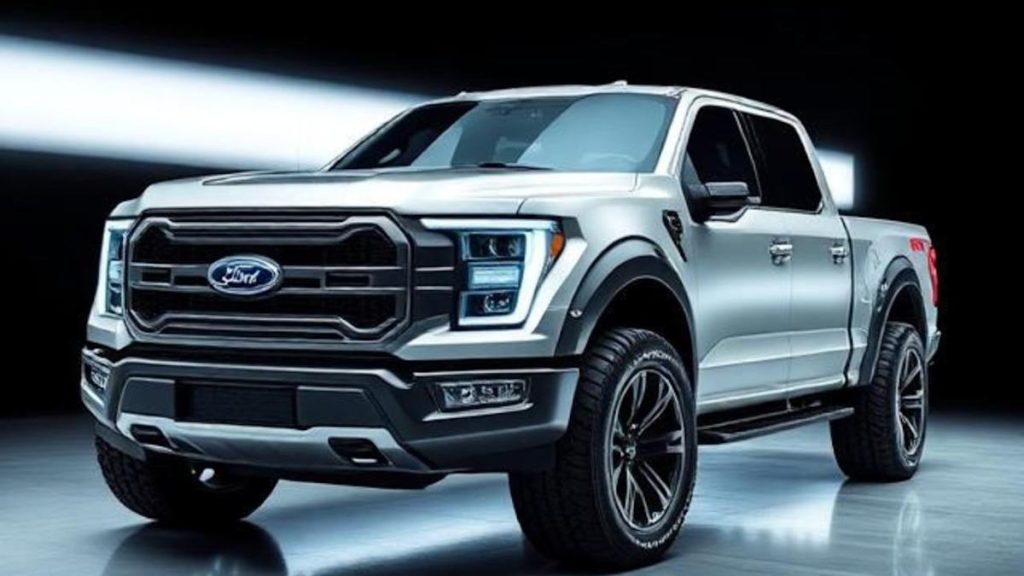
The first vehicle to get this upgrade will be a $30,000 electric pickup truck built on a new platform Ford calls General Electric Vehicle. The truck is scheduled to launch in 2027 and will offer a Level 3 Driver Assistance Package as an optional extra.
Ford executives say they want the autonomous technology to be cheaper. A Ford executive quietly said autonomy should not be a prerogative of high-end luxury cars. Ford explained at CES: “Because we own the technology behind the driver assistance system, we can provide more features at a cost that is 30% lower than buying it from outside suppliers, which makes the advanced driver assistance system scalable.”
By building most of its systems in-house and integrating sensors and other technology, Ford hopes to reduce costs and speed development.
Ford’s new autonomy playbook

Image credit: Ford.
But there’s more to it than just relaxing while driving on the highway. Ford has also publicly hinted that it might one day get into the robotaxi business. These are fully driverless vehicles that can transport people around cities without anyone behind the wheel. While the company didn’t announce specific dates or plans for its taxi fleet, executives said Eyes Away technology by 2028 could be an important foundation for realizing that ambition.
It’s a significant shift for a company that has scaled back some of its early self-driving projects in recent years and scaled back its Argo AI self-driving project. Ford isn’t immediately pursuing full Level 4 or 5 autonomy, instead emphasizing a practical, incremental approach that first brings real benefits to drivers on the highway and then builds out broader capabilities from there.
In addition to driving automation, Ford is also launching a new in-vehicle artificial intelligence assistant that promises to make its vehicles feel smarter and more responsive. This year, the assistant will initially be available through Ford and Lincoln mobile apps and will eventually be installed in vehicles. It can answer questions about the vehicle’s status, help plan trips, and control features like climate or navigation with voice. Ford describes it as a personal companion that understands the specifics of your vehicle and adapts to your driving habits.
This is Ford’s response to similar moves by competitors. Many competitors are ramping up artificial intelligence and autonomous offerings. Some tech startups and other automakers are already testing robotaxis or expanding hands-free driving zones. In fact, autonomous driving is the golden goose at CES 2026. Ride-hailing companies and luxury brands are pushing boundaries, and Ford doesn’t want to be left behind.
what’s in it for you
For us drivers, this is the most important thing right now. Over the next few years we will see:
-
Better hands-free driving that doesn’t require you to keep your eyes on the road. By 2028, some models will have this feature.
-
New electric vehicles bring this technology to more affordable price points.
-
Artificial intelligence assistant makes it easier for you to control your vehicle.
-
The industry talks about robotaxi services that may one day be completely independent of people’s ability to drive.
On a final note, we heard Waymo’s boss say robotaxis will never replace human drivers, which makes sense given the cost (roughly $300,000 per robotaxis).
For now, the technology still works under defined conditions, such as well-marked highways and clear weather. Drivers still need to be ready to take control when the lane turns twisty or traffic becomes chaotic. But taking your eyes off the road without worrying about safety may be closer than you think, and it’s a milestone for both daily drivers and future mobility.
Source: Bloomberg, Reuters