


There was a time when the word “affordable” had a very different meaning in the American car market. In 1908, Henry Ford put the world on wheels with the introduction of the Model T, a car that fit the average worker’s budget and transformed society.
Fast forward to 2026, and Ford has announced an “affordable” new car in the United States that will cost under $40,000. We should be happy about this bargain. In fact, it feels like a nostalgic wink to a past where accessibility meant something entirely different.
The news came at the National Automobile Dealers Association show in Las Vegas, where Ford confirmed plans for five new models priced under $40,000, including cars, trucks, SUVs and vans. The vehicles will bear new nameplates and feature combustion, hybrid and electric powertrains.


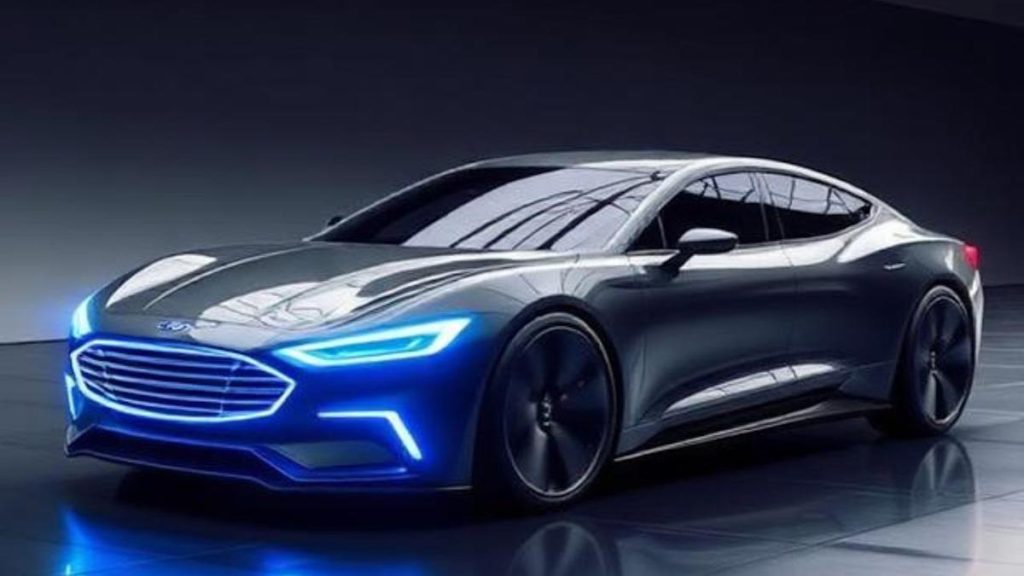
Computer rendering.
The car itself is especially noteworthy because sedans and compact cars have largely disappeared from Ford’s U.S. lineup since the Fiesta, Focus, Fusion and Taurus were discontinued.
Ford’s showroom floors have been dominated by trucks and SUVs for nearly a decade, leaving car buyers wondering if the Blue Oval has forgotten how to build one.
The changing meaning of “affordable”
One can’t help but stop and think about what $40,000 means today. Just recently, Tesla introduced an “affordable” Model Y variant, starting at $42,000, which should have caused cheers.
Meanwhile, the average transaction price of a new car in the United States exceeds $50,000. In this case, Ford’s new car is technically under the magic number, but still nowhere near what our grandparents thought the typical worker could afford.
Inflation, rising manufacturing costs, and decades of market evolution have transformed the definition of affordability into something that sounds almost ironic.
Ford’s challenges run deeper than pricing. The automaker doesn’t even pretend to be trying to recapture some of the glory of the Model T era.

Image credit: Sergey Ryzhov/Shutterstock.com
How is that possible when you’re looking down at the fangs of a fire-breathing dragon from the east and navigating a landscape dominated by SUVs, crossovers and electric cars? Today’s consumers care not just about price, but also about technology, range, efficiency and resale value.
Ford has proven to be good at trucks and performance cars, but translating that expertise into new compact or midsize cars with electrification options is another story entirely.
Adding a hybrid or all-electric powertrain to a cost-conscious package is a balancing act that requires smart engineering and supply chain mastery. Or maybe borrow a leaf or two from the dragon. The stakes are high and the competition is fierce.
Return to the roots and meet new challenges
But there is hope. The move signals Ford’s willingness to reintroduce genuine vehicles to the U.S. market, not just as niche models but as part of a broader lineup designed to improve real-world affordability. This could help re-engage customers who have turned to foreign brands or all-electric alternatives.
Additionally, it revitalizes a part of the Ford brand that goes back to the company’s roots: getting people to drive in a life-changing way.
Can this new car embody the revolutionary spirit of the Model T? We’ll know by the end of the century. History shows that accessibility can change the world, but price alone does not define it. If Ford succeeds, a sub-$40,000 car in 2030 could not only fill a gap in the market, but also remind Americans that the Blue Oval can still be innovative and exciting.
In the meantime, we can marvel at the noteworthy irony of sub-$40,000 cars in 2026 and wonder if any automaker can make affordability synonymous with freedom on four wheels again. As we speak, Dragon is giving birth to such a vehicle.