


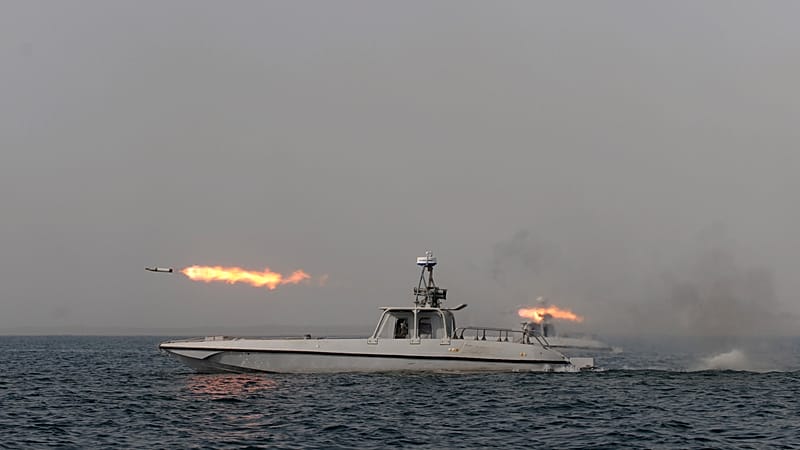
The first attack on a ship in the Strait of Hormuz occurred on Sunday morning.
The Oman Maritime Security Center announced that an oil tanker named “Skylight” flying the flag of the Republic of Palau was attacked 5 nautical miles (9.26 kilometers) north of Khasab Port.
Omani authorities confirmed in a statement shared on
Initial information also showed that at least four people were injured and have been transferred for treatment.
It was unclear who attacked the ship, but the incident came after Iran’s Islamic Revolutionary Guard Corps (IRGC) declared the Strait of Hormuz closed to international navigation on Saturday.
Omani authorities also said the port of Duqm was the target of a drone strike.
The country served as a mediator between Tehran and Washington in recent nuclear negotiations.
Strait of Hormuz
After the United States and Israel launched attacks on Iran that killed Supreme Leader Ayatollah Ali Khamenei and triggered Iranian missile retaliation, Iran’s Islamic Revolutionary Guard Corps issued a radio warning declaring the Strait of Hormuz effectively closed and saying no ships would be allowed to pass.
Although Tehran has not officially announced a total lockdown, the threats sparked immediate chaos. Ship traffic has dropped sharply as ships get stuck outside the Gulf of Oman or turn around en route.
Relevant
Most major shipowners and operators have suspended operations through the Strait of Hormuz, and marine insurance companies have stopped covering any voyages in the area, leaving shippers exposed to huge risk premiums or outright denial of coverage.
Specific examples include the VLCC “KHK Empress”, partially loaded with Omani crude oil, and the Indian-flagged “Desh Abhimaan”, both of which turned back.
global oil market
Oil futures resumed trading on Sunday night with widespread talk of Brent hitting $100 a barrel, a level last reached after Russia invaded Ukraine in 2022.
Analysts at Barclays and other firms have explicitly raised their forecasts to that threshold, warning that a prolonged shutdown could reduce output by 20 million barrels per day, or about 20% of global supply.
Eight OPEC+ countries, namely Saudi Arabia, Russia, Iraq, the United Arab Emirates, Kuwait, Kazakhstan, Algeria and Oman, held a virtual meeting on Sunday to review global market conditions and prospects.
In a press release, they announced a small increase in oil production by 206,000 barrels per day starting in April.
The statement also revealed that the eight OPEC+ countries will “meet monthly to review market conditions, compliance and compensation,” with the next meeting scheduled for April 5.
Iran’s naval blockade has yet to materialize, but the actual closure and ineffectiveness of insurance have caused significant volatility.
Ship tracking monitors show much of the traffic on both sides is at a standstill and any further escalation or downgrade will determine how the market reacts.