


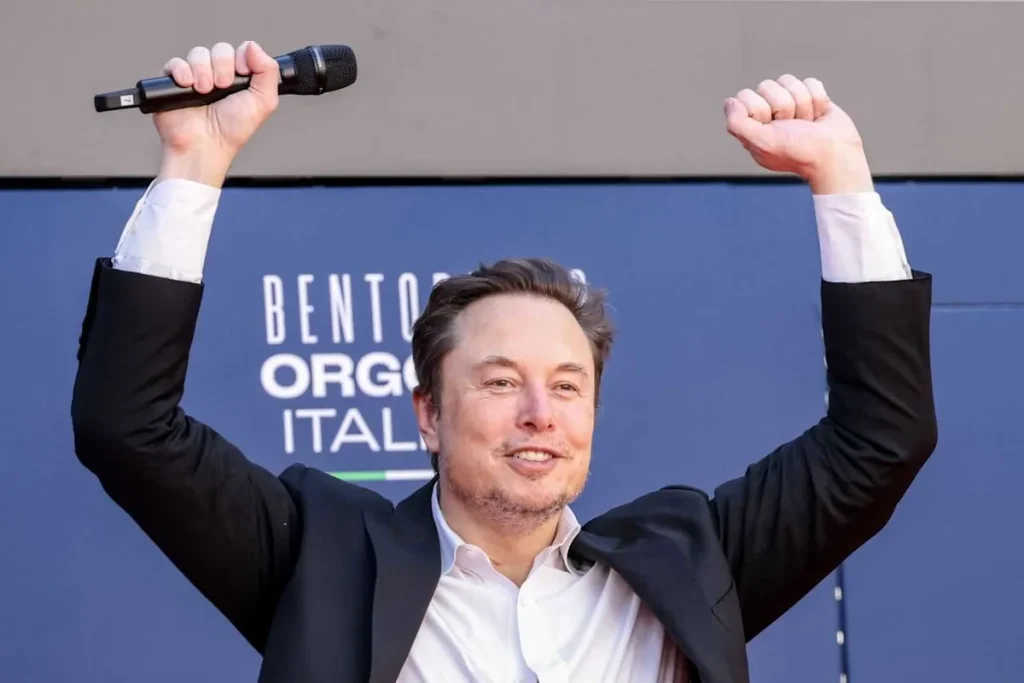
Elon Musk is now openly questioning whether saving for retirement will make sense in the future, a view he ties directly to the speed at which he believes artificial intelligence and robots will destroy today’s labor market.
Amid widespread discussions about artificial intelligence (AI) and automation, Tesla ( TSLA ) and SpaceX/xAI CEO Musk laid out a timeline that will upend decades of economic assumptions. In his view, the first wave has already begun: white-collar jobs. He believes that lawyers, accountants, analysts, marketers, coders and other jobs that have long been considered “safe” because they are cognitive rather than physical, are the most vulnerable to AI systems that can reason, write, analyze and iterate at superhuman speeds.
Next are blue-collar jobs. Musk believes that humanoid robots, combined with increasingly capable artificial intelligence models, will soon replace most manual labor. Manufacturing, logistics, construction, and even services will eventually follow. His estimate of that transition is aggressive: three to seven years.
The end result, Musk believes, is not mass scarcity but abundance. If AI and robots can produce goods and services at near-zero marginal cost, scarcity will collapse. Food, housing, transportation, energy, and manufactured goods all became very cheap. Productivity is exploding not because humans are working harder, but because machines are doing almost all the work.
This is where Musk’s idea of “universal high income” comes from, a term he has previously used to distinguish his views from traditional universal basic income. This is not a modest government subsidy designed to keep people afloat. In this world, the cost of living has dropped dramatically and most people, whether they work in traditional jobs or not, can afford a high standard of living.
Against this backdrop, he made statements that directly contradicted decades of financial planning orthodoxy.
“My one piece of advice,” Musk said, “is don’t worry about saving for retirement in 10 or 20 years. That doesn’t matter. You don’t need to save for retirement. If anything we say is true, saving for retirement won’t matter.”
From today’s perspective, this statement sounds reckless and almost irresponsible. Retirement planning is based on assumptions of lifetime wage labor, limited productivity growth, and persistent scarcity. But Musk explicitly rejected these assumptions. He argued that if work itself disappears, so does the entire concept of retirement. There is nothing to “retire” and no need to set aside funds to see you through your old age.
Critics argue that this vision depends on a long list of optimistic assumptions: perfect artificial intelligence progress, smooth political coordination, fair distribution of wealth, and a world in which social instability does not derail the transition. History shows that technological revolutions are rarely so clean.
Even Musk has acknowledged in past comments that the transition could be rocky. Migration can occur faster than new distribution systems can be established. Governments, institutions, and culture often evolve much more slowly than technology.
Still, his argument raises a troubling question for investors, workers and policymakers. If AI does eliminate white-collar and blue-collar labor within a decade, today’s financial strategies, career ladders, 401(k)s, pensions, and retirement ages may be optimized for a world that no longer exists.
For now, Musk’s vision remains speculative. But coming from the CEO of a company at the heart of artificial intelligence, robotics and automation, it can’t be easily dismissed as science fiction. Whether or not universal high incomes become a reality, the implications are clear: Even if Musk is partially right, the future of work and the future of money will look very different from the past.
On the date of publication, Caleb Naysmith did not hold (either directly or indirectly) any securities mentioned in this article. All information and data in this article are for reference only. This article was originally published on Barchart.com