


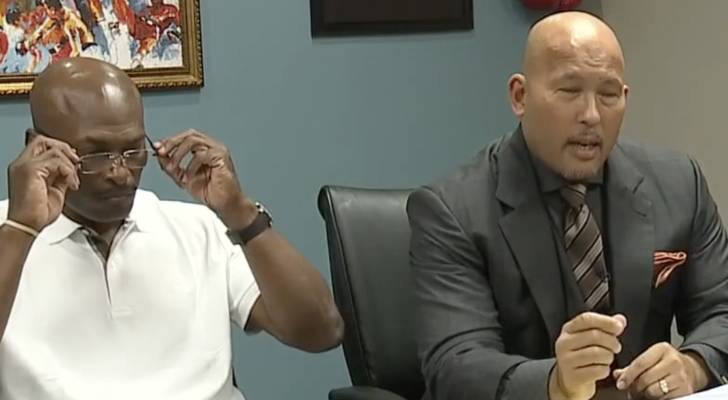
Desmond Ricks was jailed for 25 years for a murder he did not commit until his conviction was overturned and he was released.
After his acquittal, Ricks was awarded more than $1 million in damages under Michigan’s Wrongful Imprisonment Compensation Act. The law, which took effect in 2017, pays out approximately $50,000 per year to wrongfully incarcerated people. The purpose of compensation is to recognize the losses suffered by the exonerated person while in prison.
As of July 2024, Ricks is one of 77 acquitted persons who have received compensation under the law. The state of Michigan has been awarded a total of nearly $52 million in compensation through these claims(1). But his lawyer said no amount of money could make up for the losses.
“Desmond Ricks suffered the worst injuries and pain you can imagine,” his attorney, Wolf Muller, told WXYZ Detroit (2). “To be locked up in a cage for 25 years for a crime he did not commit. The $1 million and a quarter in restitution mandated by the state is no match for the harm he suffered.”
Now, the state of Michigan is asking Ricks to return the money. Here’s why.
The order requiring Ricks to repay the state stems from a Michigan Court of Appeals ruling following a separate civil settlement over his wrongful conviction.
The settlement comes from the city of Detroit, which agreed to pay Ricks $7.5 million to resolve a lawsuit alleging police misconduct. Ricks claims that police switched bullet evidence to frame him for the 1992 murder(3).
The case was reopened in 2016 after new evidence was uncovered by the Innocence Clinic at the University of Michigan Law School. Tests showed the bullets recovered from the victim, Gerry Bennett, did not match the .38-caliber gun prosecutors identified as the murder weapon.
Under Michigan law, a releasee must repay damages obtained through the Wrongful Incarceration Compensation Act if he or she later obtains damages from a third party related to the same conviction. This process, called clawback, allows the state to recover funds that have been paid (4).
In addition to wrongful conviction cases, recovery is more commonly used in corporate and financial contexts, such as recovering executive bonuses following misconduct or recovering improperly paid government benefits.
Similar clawback provisions exist in several states, meaning acquittals who receive civil settlements are often barred from retaining both awards.
Read more: Young millionaires are reconsidering stocks and relying instead on these assets in 2026 — here’s why older Americans should take note
State Sen. Joe Bellino said Michigan’s clawback provision is designed to protect the Wrongful Incarceration Compensation Act fund when a releasee later receives a large settlement from a lawsuit or other third-party source related to the same conviction.
He pointed to periods when the fund was short of money as evidence of how lawmakers wanted to claw back payments from the state after receiving additional compensation. The debate goes beyond budget issues and highlights broader failings in policing and prosecution that have led to wrongful convictions across the country.
Bellino said as civil lawsuits and multimillion-dollar settlements become more common, clawing back state funds is seen as a way to preserve the program for future acquittals, rather than allowing overlapping spending to strain limited resources.
“The country is not a barrel that you can double-dip when mistakes are made,” he said.
This framing often ignores the financial realities exonerates face upon release.
When Marvin Cotton Jr. was released in 2020 after nearly two decades in prison, he had been struggling to secure housing and employment(5). He quickly depleted his savings and relied on high-interest loans to cover basic expenses. Years away from work, lingering background check issues and a lack of immediate income put him at financial risk at a time when he was expected to rebuild his life.
Supporters say Cotton’s experience reflects a broader pattern, even if the legal outcome is different. Some acquittals wait years to receive compensation, others are denied outright, and still others, like Ricks, face clawbacks after receiving civil settlements.
Nationwide, nearly four dozen states authorize compensation for wrongful convictions, typically around $50,000 per year in prison. However, according to the Death Penalty Information Center, only about 42% of acquitted persons receive any compensation (6).
Mueller said kickbacks could reduce decades of damage to budget execution and argued that civil settlements for wrongdoing should not be viewed as interchangeable with state compensation.
“No amount of money can make up for a quarter of a century of harm and the loss of an entire adult life. Is 50,000 a year a small sum compared to the harm?” Mueller said.
We rely only on vetted sources and reliable third-party reports. For more information, see our Editorial Ethics and Guidelines.
Registry of Innocences (1); WXYZ Detroit (2, 3); Institute of Corporate Governance (4); Advocacy (5); National Registry of Exonerations (6).
This article provides information only and should not be considered advice. It is provided without any warranty of any kind.