


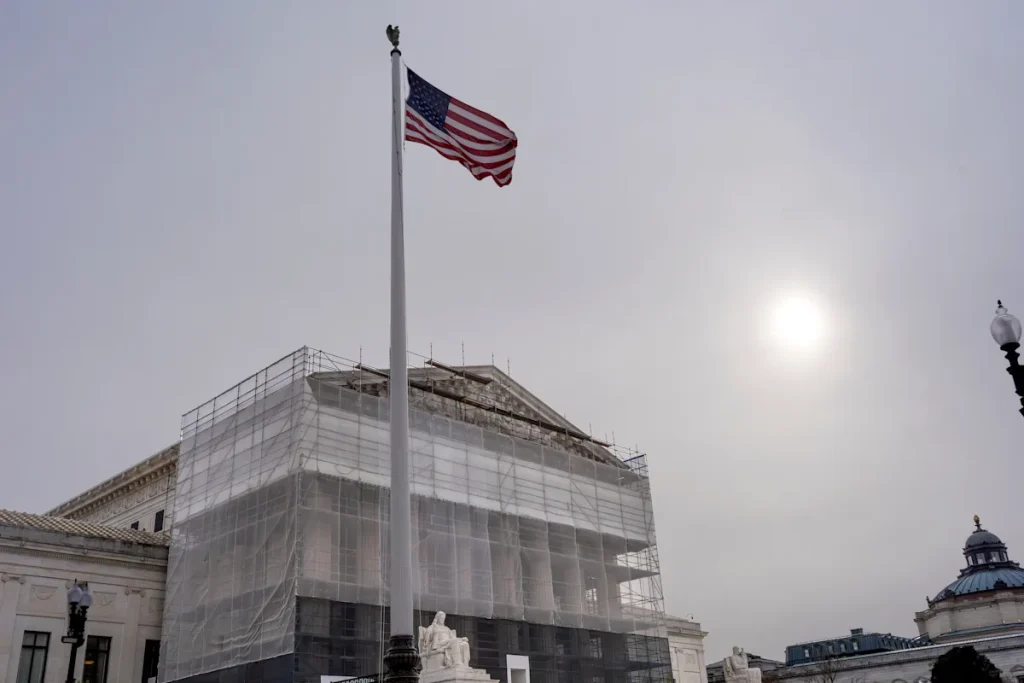
WASHINGTON (AP) — Chief Justice John Roberts said Wednesday that the Constitution remains a solid pillar of the nation, a message that comes after a tumultuous year for the U.S. justice system and a key Supreme Court ruling on the horizon.
Roberts said America’s founding documents remain “steadfast,” referring to President Calvin Coolidge’s century-old quote. “That was true then and it is true now,” Roberts wrote in his annual letter to the Justice Department.
The letter comes a year after legal scholars and Democrats expressed concern about a possible constitutional crisis as supporters of Republican President Donald Trump oppose rulings that would slow down his far-reaching conservative agenda.
Roberts issued a rare rebuke sometime in March after Trump called for the impeachment of a judge who ruled against him in a case to deport Venezuelan immigrants accused of being gang members.
The chief justice’s letter Wednesday focused largely on U.S. history, including an early 19th-century case that established the principle that Congress should not remove judges for controversial rulings.
He also called on judges to “continue to decide the cases before us in accordance with our oaths, to give equal rights to the poor and the rich, and to discharge all of our duties faithfully and impartially under the Constitution and laws of the United States.”
While the Trump administration faces resistance in lower courts, it has scored about two dozen victories in emergency Supreme Court cases. The Supreme Court’s conservative majority allowed Trump to temporarily move forward with banning transgender people from serving in the military, rolling back billions of dollars in federal spending approved by Congress, aggressively advancing immigration and firing Senate-confirmed leaders of independent federal agencies, among other moves.
Courts also handed Trump a number of defeats last year, including his push to deploy the National Guard to U.S. cities.
The high court will face other key issues in 2026, including arguments over Trump’s push to end birthright citizenship and a ruling on whether he can unilaterally impose tariffs on hundreds of countries.
Roberts’ letter contains little mention of these issues. It begins with the history of Common Sense, a seminal 1776 pamphlet written by Thomas Paine, a “newcomer to Britain’s North American colonies,” and ends with Coolidge’s encouragement to “seek solace” in the Constitution and the Declaration of Independence “in the chaos of partisan politics.”