


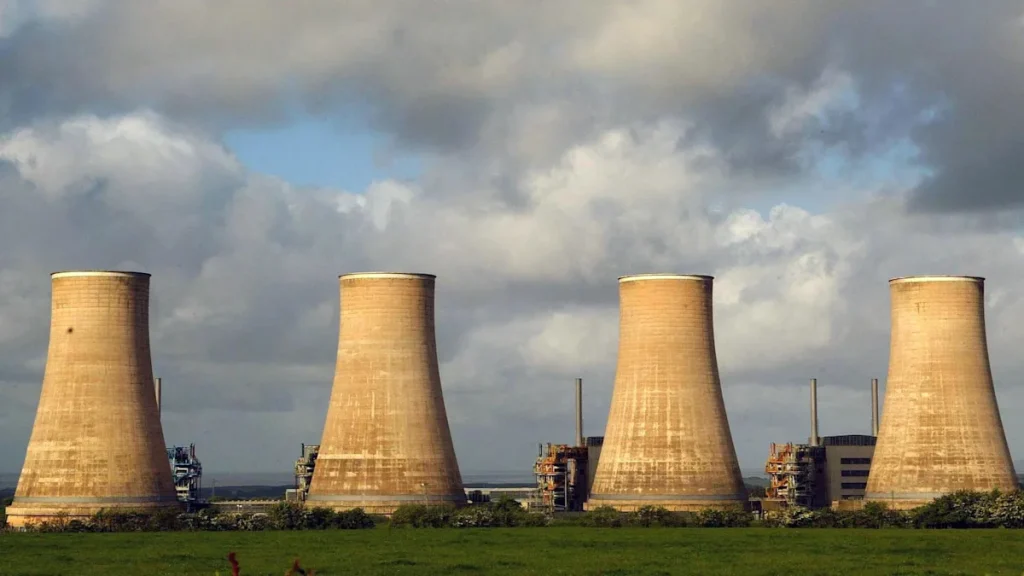
Seventy years ago, a project began that would profoundly change the landscape of parts of southern Scotland.
In 1955, construction began on Chapelcross Nuclear Power Station near Annan (Scotland’s first nuclear power station), and approximately 2,000 workers were conscripted.
It began generating electricity in 1959 and continued to generate electricity until 2004, and the plant is still undergoing decommissioning work today.
There are now plans in place that will continue to play their part in meeting the nation’s energy needs, but from very different sources.


The plant has been generating electricity for about 45 years [Getty Images]
Building the plant was a massive undertaking, with eight feet (2.5m) of concrete covering the four reactors.
Its four cooling towers were 71 feet (21m) tall and became a familiar landmark before being demolished in 2007.
The site was officially opened on May 2, 1959, and in its heyday provided employment to hundreds of people.
At full power, it can produce enough electricity to meet the needs of every home in south-west Scotland, the Borders and Cumbria.
It also produces important elements used in atomic bombs.
There were calls for a replacement plant to be built on the site after it ceased operations, but the Scottish Government opposes the construction of a new one.
Instead, it is hoped the region will be able to leverage its links to the national grid to become a green energy hub and ensure it remains a large employer in the region.
Richard Murray, director of Nuclear Restoration Services in Chapelcross, is one man who knows more of the story than most.
He started as an apprentice in 1987 and spent a total of over 30 years in his career at the Dumfries and Galloway sites.
“I am a native of Annam,” he said.
“I have a lot of uncles, aunts and cousins who work on the site, so I have a long family connection to the site as well, and obviously having grown up in Annan, I know a lot of the people who work here.”
Its importance to the local economy cannot be overstated, he said.
“At its peak, well over 700 people were employed here,” he said.
“This is a 24/7 operation, 365 days a year – parts of Annan Town were built to accommodate workers in the area.”
Around 200 staff were still working during the decommissioning period, so it was still an important employer, but numbers were well below previous levels.
He said the removal of the cooling towers in 2007 was a significant moment because many people in the area used to say that when you saw them, you knew you were almost home.
“From a personal perspective, when I was a kid I could see them from my bedroom window, so it’s a real landmark in the area,” he added.
He hopes to see worker numbers grow again in hydrogen, solar, battery storage and developing renewable energy technologies.
Of course, in the meantime, there’s the decommissioning process, and Richard says they “still have decades of work to do.”
The latest estimates are at least another 70 years away, which would have to coincide with any new development.
Richard said the new nuclear power station was very different from Chapel Cross and he believed it could still play a role in meeting the country’s energy needs.
However, the Scottish Greens would be happy to see it take on a different role.
“There’s a great opportunity to turn this site into a green energy hub,” said the party’s Laura Moody.
“This means clean energy, good jobs and a real step towards tackling the climate crisis.
“Repurposing old sites for renewable energy, particularly while training and supporting local workers, is exactly the kind of forward thinking Scotland needs.”
The details of what that means are still being fine-tuned.
Graeme Anderson, chief executive of CX Power, the strategic developer of the Green Energy Hub scheme, said the plans were still at an “early and exciting stage”.
“Our focus now is on developing ideas, building strong relationships and working closely with local communities and stakeholders to understand what matters most to them and where the opportunities lie,” he said.
They hope it will bring “real long-term benefits” to the entire region, which is Scotland’s nuclear power pioneer.