


SACRAMENTO, Calif. — Starting January 1, 2026, a landmark state law will begin to reshape how big rigs move across parts of California as communities and the transportation industry prepare for change. The legislation, formally known as Assembly Bill 98, was hailed by many community advocates as a hard-won victory for residential safety and clean streets, but also criticized by some drivers and logistics stakeholders for adding additional regulatory burdens to already-strained supply chains.
AB 98’s core concept is simple and sweeping: Large trucks serving freight and logistics hubs, particularly in the Inland Empire and other “warehouse-concentrated areas,” must follow designated truck routes and avoid residential areas or other sensitive areas like schools, parks and homes.
Municipalities must revise their official truck route maps to comply with the state’s new standards by January 1, 2026, and fully update local plans by January 1, 2028. Failure to meet the deadline may trigger penalties of up to $50,000 every six months.
Reroute trucks to protect communities
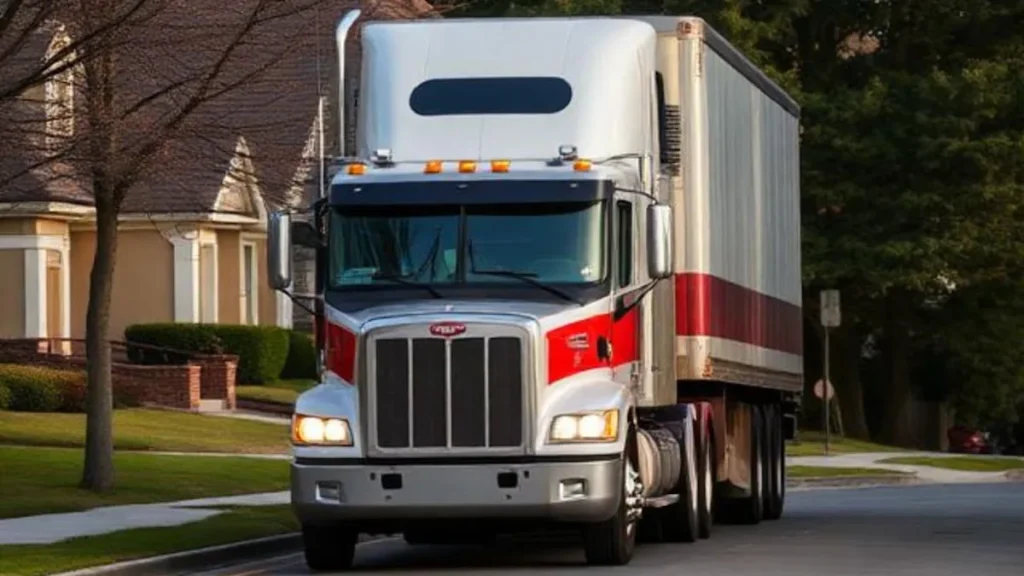
Supporters of the legislation point to decades of community concerns about heavy vehicles driving through alleys, shaking foundations, disrupting school zones and spewing diesel exhaust into neighborhoods. In parts of Southern California’s Inland Empire, where logistics warehouses proliferate next to sprawling residential areas, families describe seeing 18-wheelers constantly passing by their windows.


Image credit: Sony 1992 – Own work, CC0, Wikimedia.
The experience helped drive support for the state’s new mandate and public participation in local truck route planning.
In a series of community workshops in cities like Redlands, planners and residents have begun mapping out how these changes will look on the ground. In Redlands, for example, officials have proposed eliminating truck rights of way that have long flowed through quiet neighborhoods and redirecting traffic to major arterials or newly designated commercial corridors.
The rationale is to focus truck movements on infrastructure designed to handle heavy loads and pass-through traffic, reducing wear and tear on residential pavements and the risk of collisions with pedestrians and cyclists.
Challenges and concerns with new truck routes
However, this process has not been without controversy. Truckers and some industry figures believe the new route restrictions complicate already tight delivery schedules. Many truckers say local roads, even those not classified as arterials, are familiar and efficient connectors they rely on, especially when remote warehouses and distribution centers are not located near highways.
There are also concerns about the adequacy of amenities such as parking, rest stops and meals along the newly designated network. Questions about enforcement also loom: State and local law enforcement agencies will need new tools and resources to monitor compliance, a task that truckers and planners worry could strain already stretched departments across California’s vast road network.
To some in the industry, the law reflects a broader pattern of tightening regulations in California’s transportation industry. State officials have adopted a range of measures aimed at reducing pollution and improving road safety, from ambitious zero-emission targets for heavy-duty trucks to updated liability and safety standards requiring higher insurance coverage and stricter vehicle rules. These broader efforts, while distinct from truck routing, set the stage for debate over the cumulative compliance costs faced by truckers and trucking companies.
Balancing business and community


Image credit: Sony 1992 – Own work, CC0, Wikimedia.
Despite these pushbacks, local officials stress that route legislation is rooted in a strategy to balance economic activity with quality of life. “Designating truck routes does not mean cutting off commerce,” one city planner explained at a community hearing. “That means directing business in a way that keeps our communities safe and our roads intact.”
Municipalities also need to engage citizens, tribes and community organizations in updating their circulation and truck route plans, ensuring a broad range of voices influence how the rules are applied locally.
As the Jan. 1 start date approaches, California communities are moving from draft proposals to charting a course through public hearings, council votes and GIS-based maps to help finalize where large trucks will be allowed and where they won’t. For residents long frustrated by the constant rumble of diesel exhaust and freight traffic, the promise of quieter streets is real.
For truckers accustomed to flexible routing between warehouses and highways, the new legal environment represents a shift that requires adjustments in planning, technology and daily practices. Enforcement in the coming months will be the true test of California’s ability to achieve the goal of its new truck route law: smoother delivery traffic while respecting the livability of the areas it passes through.