


Israel launched a comprehensive military response to Hamas’s brutal attack on October 7, 2023, and launched strike after strike against the forces of Iran, the militant group’s long-time backer, and its other proxies and allies in the region.
The result has been a rapid and systematic decline in Iran’s influence in the Middle East over the past 2.5 years, a dramatic change that directly led to the devastating attacks by the United States and Israel on Iran this weekend.
“There is no doubt that the events of October 7 were a turning point in this long conflict between Iran and Israel,” said Mehrzad Boroujerdi, an expert on Iranian politics at Missouri University of Science and Technology. “I think that provides Israel with an argument or a reason to launch a powerful strike.”
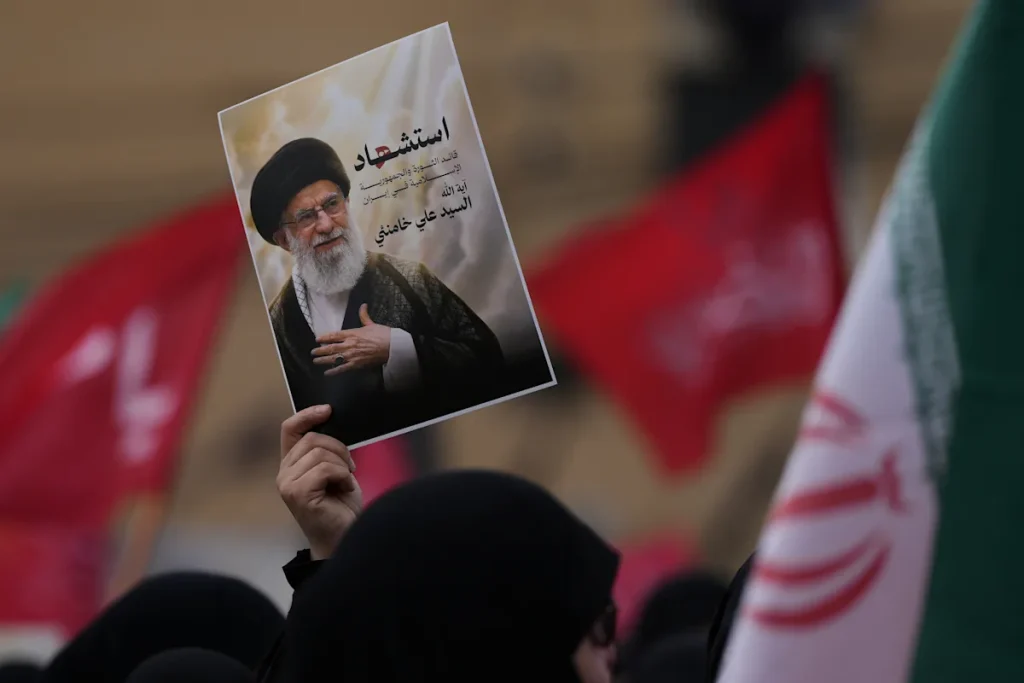
The most devastating blow yet came this weekend when President Donald Trump and Israeli leaders launched a wave of attacks on Iran, killing Iran’s Supreme Leader Ayatollah Ali Khamenei and causing widespread damage. But the war, while still in its early stages, is part of a long series of events that have severely weakened Iran, Hezbollah and other proxy militias and upended the political balance in the region.
“The Middle East is going through a very bloody, very violent but transformative moment,” said Leonard Mansour, a senior fellow on the Middle East at Chatham House, a British think tank. “We don’t know where this will end up.”
Gaza war is the root cause
The damage to Iran’s power stems from the war in Gaza, where Israeli forces followed Hamas after militants killed 1,200 people and took 251 hostages in an Oct. 7 attack. Israel has killed more than 72,000 Palestinians in Gaza, nearly half of them women and children, according to the ministry, which is run by the Hamas government in Gaza and does not distinguish between militants and civilians.
However, the conflict quickly expanded to include other groups in the Iran-backed resistance axis.
In Lebanon, the powerful militant group Hezbollah has long been considered Iran’s first line of defense in a war with Israel. The group is believed to have around 150,000 rockets and missiles, and its former leader Hassan Nasrallah once boasted of having 100,000 fighters.
After October 7, the group fired rockets towards the Israeli border in a bid to aid its ally Hamas. This triggered Israeli air strikes and artillery fire, with the exchange escalating into full-scale war in the fall of 2024.
Israel has wreaked havoc on Hezbollah, killing Nasrallah and other senior leaders and destroying much of the militant group’s arsenal, and a U.S.-negotiated ceasefire in November nominally halted the conflict. Israel continues to occupy parts of southern Lebanon and conducts almost daily airstrikes.
Hezbollah was further weakened when rebels overthrew the regime of key ally Syrian President Bashar al-Assad, cutting off a key supply route for weapons from Iran.
Yemen’s Houthi rebels, also backed by Iran, have joined the widening conflict, firing rockets at ships in the Red Sea and targeting Israel. U.S. warships and Israeli troops fired back.
Israel abandons status quo
Mansour said that as the conflict expanded, Iranian leaders and their proxies failed to recognize that Israel had abandoned the status quo that had long been tense and sought to achieve a fundamental transformation.
The damage to Iran escalated last June when Israel launched a surprise offensive aimed at destroying Tehran’s rapidly advancing nuclear program as Iran and the United States negotiated a nuclear deal. In the 12 days of war that followed, the headquarters of Iran’s energy industry and defense ministry were bombed.
Iran’s weakened proxy groups have largely been on the sidelines as their sponsors came under direct attack last year. So far in the new war, they’ve done much of the same thing.
For Hezbollah and other Iran-backed groups, “this is a matter of survival,” Mansour said. He noted that over time, as the Axis became less driven by top-down orders from Iran, the groups became more autonomous. “The basis for their survival is not necessarily the calculation of Iran’s survival.”
Since Israel and the United States launched a series of attacks on Iran on Saturday, Tehran’s allies and proxies in the region have played a minimal role in the response.
Hezbollah appeared to be changing early Monday, even as the group came under intense pressure from Lebanese officials not to participate in the fight to defend Iran over fears of another destructive war in Lebanon.
Hezbollah issued a statement condemning the US and Israeli attacks on Iran and expressing condolences for the death of Iran’s Supreme Leader Ayatollah Ali Khamenei. It then hinted at possible involvement. It did fire missiles towards the border earlier on Monday. Israel immediately retaliated with an attack on Beirut’s southern suburbs. This is the first time Hezbollah has claimed an attack on Israel in more than a year.
Hezbollah said in a statement that it launched the attack in retaliation for Khamenei’s killing and “repeated Israeli aggression.”
How will other agency groups react?
It remains to be seen how other proxy groups will react to Khamenei’s death. Charles List, a senior fellow at the Middle East Institute, said Israel’s actions since 2023 may give these groups pause.
“Previous rounds of clashes since Oct. 7 appear to have highlighted the existential risks of making yourself a target,” Lister said in an emailed response to questions from The Associated Press.
In Iraq, an alliance of Iran-backed militias calling themselves the Islamic Resistance Movement of Iraq claimed several drone attacks on U.S. bases in Erbil, the capital of the semi-autonomous Kurdish region in the north of the country. The extent of damage caused by the attack was unclear. But the Kurdish region is experiencing widespread power outages as a key gas field that supplies most of the region’s electricity ceased operations due to safety concerns.
Two officials from different Iran-backed militia groups in Iraq told The Associated Press that Iranian officials and allied Iraqi militias held a meeting two months ago to develop a response plan if Iran was attacked, including dividing tasks among Iraqi armed groups.
The officials spoke on condition of anonymity because they were not authorized to comment publicly. An official said the response decided would target the interests of U.S. forces and the semi-autonomous Kurdish region of northern Iraq, as well as neighboring Jordan.
Borujadi said people often have a misconception that Iran issues orders to its proxy armed groups and that they all follow orders. But so far, the independent decisions these groups have made to avoid conflict are a sign of the overall weakening of Iranian networks.
“With the events of October 7, the dominoes started to fall,” Boroujerdi said. “Just note everything that has changed in terms of the balance of power since then.”
___
Associated Press writer Qasim Abdul-Zahra in Baghdad contributed to this report.