


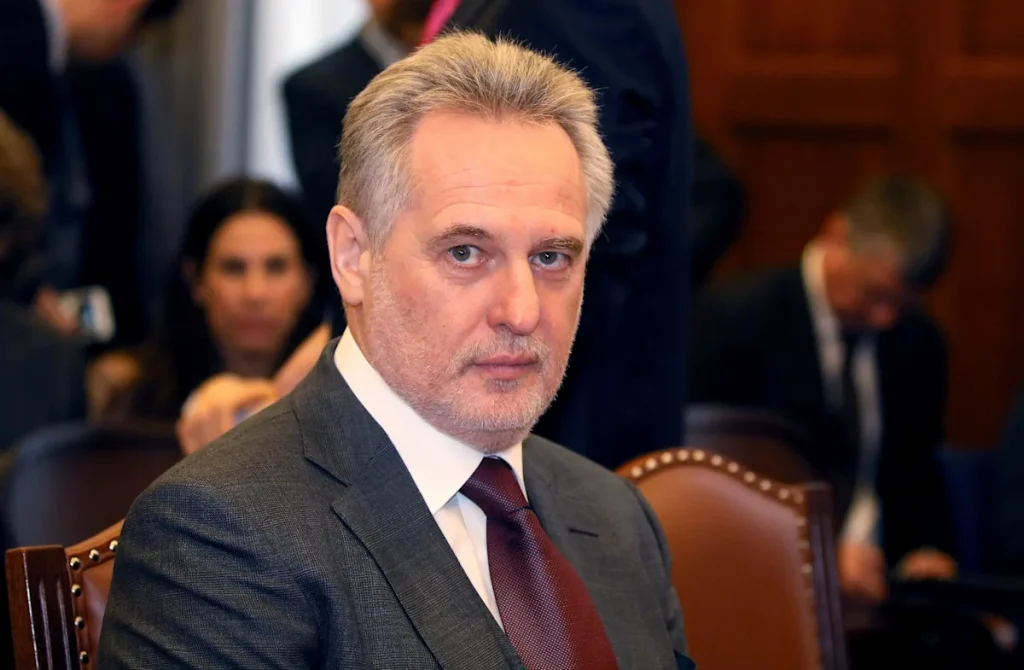
VIENNA (AP) — Austria’s appeals court has rejected a request to extradite Ukrainian businessman Dmytro Firtash to the United States for alleged corruption in a bribery conspiracy in India.
Vienna’s Higher Regional Court rejected an appeal against a lower court’s ruling last year in the long-running legal dispute. The high court said the ruling announced on December 10 was final.
Firtash faces U.S. indictments alleging he conspired to pay bribes in India to mine titanium alloys used in jet engines. He denies any wrongdoing.
The Vienna court said the extradition request related to tens of millions of euros (dollars) in bribes to obtain Indian mining licenses, but ruled that the extradition request was “inadmissible due to immunity under international law.”
Robert Kotter, a professor at the Austrian and European Institute of Economic Criminal Law, said the ruling was not a substantive decision but a formality following a lower court ruling last year.
He said prosecutors missed a deadline to file an appeal against Firtash, who had claimed diplomatic immunity as Belarus’ representative at international institutions in Vienna.
“My impression is that there is not much interest in extraditing Mr. Firtash,” Cote said by phone on Monday.
Six years ago, a Chicago federal judge denied a motion to dismiss the indictment against Firtash, who argued that the United States had no jurisdiction over the crimes in India. However, the judge ruled that was the case because any plan would have affected a Chicago-based company.
Chicago-based U.S. Boeing Co. has said it would consider doing business with Firtash, but it never materialized. It has not been accused of any wrongdoing.
Firtash was arrested in Austria in 2014 and later released on 125 million euros ($131 million) bail, kicking off the ongoing legal saga. A Vienna court initially ruled against extradition on the grounds that the indictment was politically motivated.
In February 2017, the High Court rejected this reasoning due to “insufficient evidence” and ruled that Firtash could be extradited. The Austrian Supreme Court upheld this ruling in 2019.