


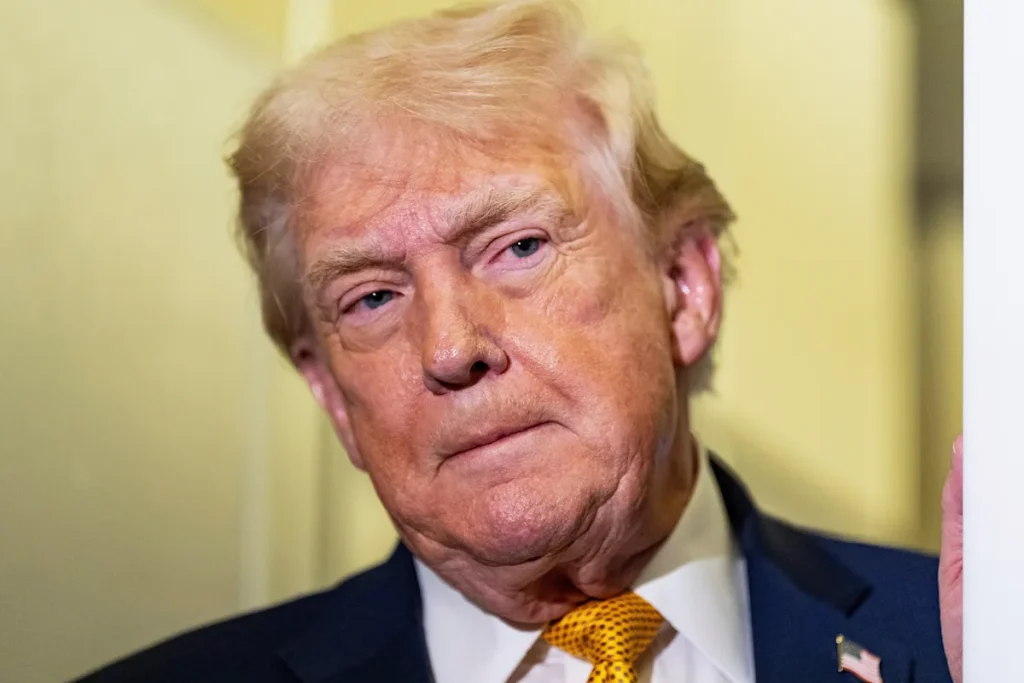
WASHINGTON (AP) — President Donald Trump has been vocal about the larger message he is trying to convey to the world: A U.S. military raid has captured Nicolás Maduro and brought the deposed Venezuelan leader and his wife to the United States to face federal drug trafficking charges.
After Maduro’s arrest, Trump declared: “America’s dominance in the Western Hemisphere will never again be questioned.”
In the days since the audacious attack, Trump and his team have doubled down on the notion that a new focus on U.S. dominance in the Western Hemisphere is here to stay. He also delayed Maduro’s arrest to explain the situation to neighbors, asking them to get in line or risk consequences.
Trump’s comments harked back to tough rhetoric from the late 19th and early 20th centuries, when U.S. presidents deployed military forces to conquer territories and resources, including Cuba, Puerto Rico, Hawaii, Honduras, Panama, Nicaragua, Mexico, Haiti and the Dominican Republic.
“Periods like Vietnam and Iraq have raised questions about the return of U.S. imperialism, but the messages from U.S. leaders during these periods were buried in talk of democracy. Trump talks about democracy in a way we haven’t seen in a long time,” said Edward Franz, a historian at the University of Indianapolis.
In the aftermath of the operation, Trump’s tough rhetoric was directed at nominal allies Greenland and Mexico – where he reiterated calls for the United States to take over the Danish territory for national security reasons. Trump said America’s southern neighbors needed to “come together” to fight drug cartels.
Trump also warned that long-time rival Cuba was “in decline” as Maduro offered heavily discounted oil to the economically isolated government in Havana but he has been deposed. The president heightened anxieties about Venezuela’s neighbors, telling reporters that a military operation in Colombia, a global hub for cocaine production, “sounds good to me.”
The Republican president also said his administration would “take control” of Venezuela policy and threatened the country’s new leader, interim President Delcy Rodriguez, with worse outcomes than Maduro if she didn’t “do the right thing.” He made clear he wanted Caracas to open its vast oil reserves to U.S. energy companies, further fueling speculation about U.S. overreach.
“We’re going to get our very large American oil companies, the largest oil companies in the world, to step in and spend billions of dollars to repair the badly broken infrastructure – the oil infrastructure – and start making money for the country,” Trump said over the weekend.
Venezuela’s invasion has divided Latin America, with Trump-aligned leaders, mostly from the right, applauding the ouster and unaligned leaders denouncing it on sovereignty grounds. There are heightened concerns that Trump may actually be serious about his desire to annex Greenland as well.
Trump relies on Monroe Doctrine to make neighbors nervous
Danish Prime Minister Mette Frederiksen warned on Monday that Trump would signal the demise of the transatlantic military alliance NATO if he tried to make good on his assertion that the United States “absolutely” needs to take over Greenland for national security reasons. The alliance, which includes the United States and Denmark, has been key to post-World War II security.
“If the United States chooses to launch a military attack on another NATO country, everything will stop,” Frederiksen told Danish broadcaster TV2.
In the early 20th century, U.S. leaders repeatedly resorted to the Monroe Doctrine, a basic U.S. foreign policy document drafted by the fifth president to oppose European interference in the Western Hemisphere.
Now, Trump is also relying on this doctrine to justify U.S. intervention in Venezuela and threaten actions in the Western Hemisphere in the name of protecting the safety and well-being of Americans.
“Trump’s comments conjure up images of Teddy Roosevelt and gunboat diplomacy. They are a throwback to the pre-war era,” Franz said, referring to the 26th president’s mediation of unstable Caribbean and Central American economies and his support for Panama’s secession from Colombia in the name of U.S. national interests.
Just weeks before Maduro was ousted, Trump unveiled a long-awaited national security strategy with disparate elements that seemed at odds with one another.
On the one hand, Trump, who has long shunned the United States’ role in foreign wars, claimed that the government would have a “non-interventionist tendency.” But the strategy document also makes clear that the administration will push to “restore U.S. dominance in the Western Hemisphere.”
With Maduro out of office, the government has apparently stepped up its crackdown on the latter.
“This is the Western Hemisphere,” Secretary of State Marco Rubio said Sunday on NBC’s “Meet the Press.” “This is where we live – we will not allow the Western Hemisphere to become a base of operations for America’s adversaries, rivals and rivals.”
Anger at the U.N. Security Council
The capture of Maduro and Trump’s rhetoric is certainly a level-setting moment for global leaders as they consider what might happen in the final three years of Trump’s second term.
At an emergency meeting of the U.N. Security Council on Monday, Colombian Ambassador Leonor Sarabatta Torres said the attack in Venezuela was reminiscent of “the worst past interventions in our region.”
“Democracy cannot be defended or promoted through violence and coercion, nor can it be replaced by economic interests,” said Sarabatta Torres, who called for the meeting.
Democrats, meanwhile, have questioned whether Trump’s actions create a licensing structure for Russian President Vladimir Putin and Chinese President Xi Jinping, who has vowed to annex the self-ruled island of Taiwan. Russian President Vladimir Putin plans to seize more territory from neighboring Ukraine.
“What the president did in this case basically gave Putin and Xi Jinping a pass,” Maine Sen. Angus King said in an interview with CNN.
Russia condemned Trump’s actions in Venezuela. Ambassador Vassily Nebenzia, the country’s special envoy to the United Nations, said the United Nations “cannot allow the United States to assert itself to the world as some kind of supreme judge.”
___
Associated Press United Nations writers Jennifer Peltz and Farnoush Amiri contributed to this report.