


“Hearst Magazines and Yahoo may earn commissions or revenue from certain merchandise through these links.”
As you read this story, you will learn the following:
-
Fragments of a human body have been found in a cenote in Mexico and are believed to be around 8,000 years old.
-
8,000 is just the minimum age estimate—depending on when the cave was flooded (at the end of the last Ice Age), the bones could be much older.
-
As the construction of the Mayan train system threatens cenotes and other underwater ecosystems, archaeologists are rushing to find what they can.
Relics of the past aren’t always buried beneath the sound of hard, dry earth. Sunken temples such as Taposiris Magna and artifacts from ancient coastal civilizations show how much history has been submerged. When archaeologist Octavio del Rio and professional cave diver Peter Broger were cave diving off the coast of Mexico’s Yucatan Peninsula, they discovered the remains of humans who had not seen land since the last Ice Age.
Between the resort towns of Tulum and Playa del Carmen, what tourists don’t usually see are the thousands of freshwater sinkholes called cenotes. They were formed by the collapse of limestone bedrock and were once considered sacred portals to the underworld by the ancient Mayans, who believed gods lived within their depths.
The pockmarked waters surrounding the Yucatan Peninsula are known for hiding ancient ruins, some dating back 13,000 years and buried in caves that were once above ground level. That is, until the end of the Pleistocene, when their ceilings collapsed due to flooding caused by melting ice and snow due to rising sea levels.
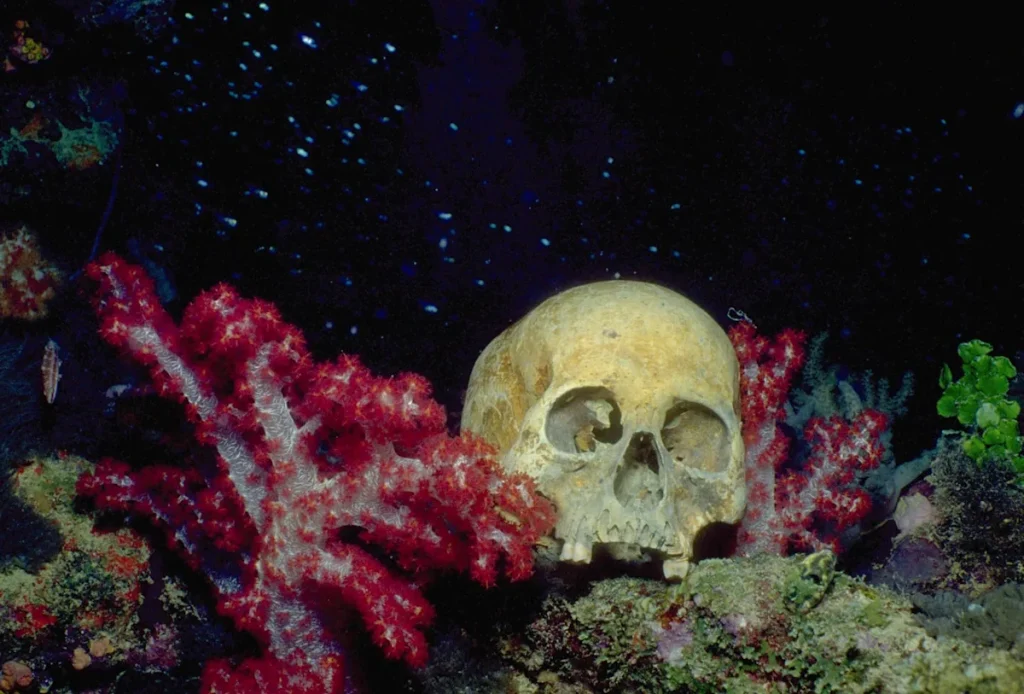
Broger discovered the shattered skull and bone fragments before eventually contacting Del Rio, who often collaborated with Mexico’s National Institute of Anthropology and History, to investigate. Because cave diving can be dangerous, they needed specialized equipment to swim through the 656-foot (200-meter) passage before discovering the remains, partially covered in sediment, 26 feet (8 meters) below the surface. Further investigation determined that the deliberate placement of the body on a pile of sediment may have been part of a funeral ritual. Del Rio explained that this is the eleventh skeleton to turn up in the area in the past thirty years, as long as he has been exploring the cenote.
“We don’t know if the body was stored there or if that’s where the person died,” Del Rio recently told The Associated Press. “There is still a lot of research[ing] This is necessary to explain [the burial] […] [including] Dating, some photography research and some collecting. “
The skeleton was determined to be at least 8,000 years old (although it’s possible it was much older) because that was the last time the cave emerged from the surface before it began to flood and form the cenote. It’s too far away from the cave entrance to have been placed there by later Paleo-Americans, who walked the Earth long before there were any underwater survival devices – let alone anything designed for cave diving. When this man was alive, the Yucatan Peninsula was a semi-arid savannah without any rivers or lakes. Water and shade were scarce, so some researchers believe ancient people sheltered from the sun in caves and had fresh water emerging from the ground.
What rituals were performed during the funeral remains a mystery. Another skeleton, estimated to be 10,000 to 12,000 years old, was buried in another cenote and surrounded by traces of a campfire. This may mean that funerary practices involved lighting up otherwise dark caves, although it is unclear whether this was for religious purposes or practical purposes. The oldest known skeleton in the cenote is called Eva de Naharon, which is 13,721 years old and is by far the oldest known human fossil in the Americas.
Unfortunately, Mexico’s cenotes are now threatened by the Mayan train system, which outgoing President Andres Manuel Lopez Obrador intends to connect Tulum and other tourist destinations to more remote jungle and archaeological sites, according to the Associated Press. This work has the potential to disrupt cenote systems, not to mention other underground ecosystems.
“These ecosystems are very, very fragile,” Northwestern University geologist Emiliano Monroy-Rios told The Associated Press in a separate interview. “They are building on a piece of land […] Full of caves and caves of varying sizes and depths. “
Now archaeologists are under intense pressure to find everything they can before mass tourism takes over. Some cenotes may no longer be safe due to falling stalactites or iron seeping from rusted steel columns that contaminates the water. Hopefully, before that happens, more discoveries like the nameless skeletons will speak from beyond the grave, making it clear how many wonders remain undiscovered.
You may also like