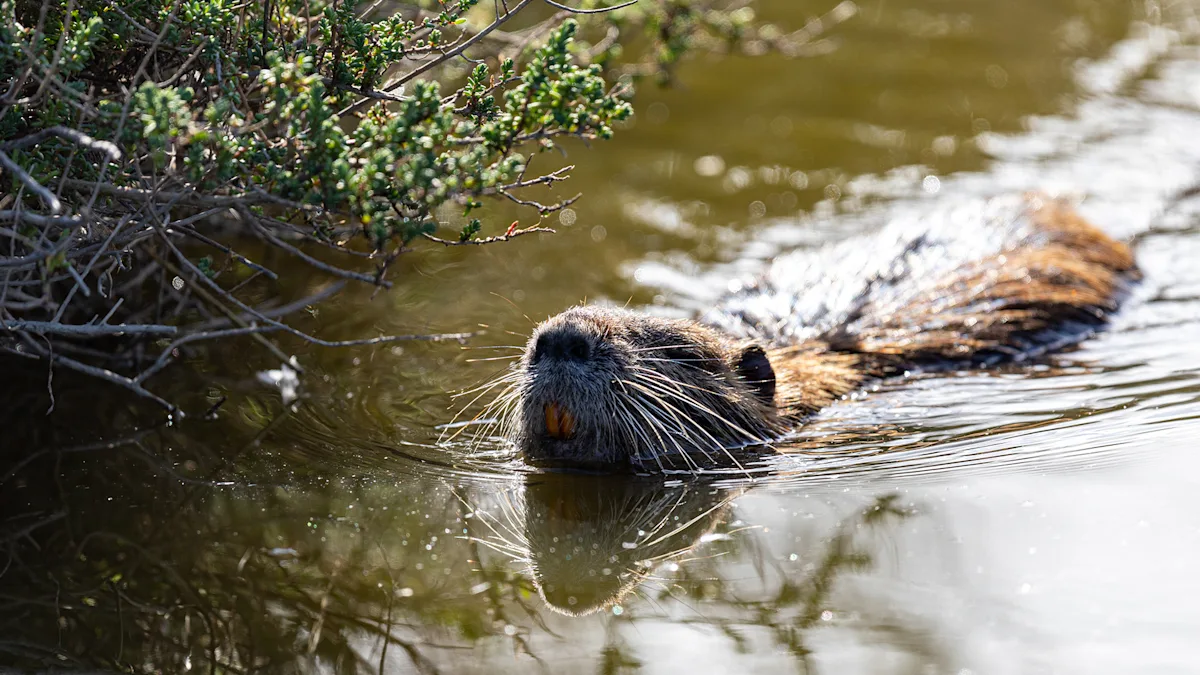
The National Park Service today announced opportunities for qualified volunteer hunters to help the Service manage invasive nutria and feral hogs on its properties in coastal Georgia and Louisiana.
At Jean Lafitte National Historical Park and Preserve south of New Orleans, volunteer hunters may be activated to control nutria and hogs. In Cumberland Island National Seashore in southeast Georgia, qualified volunteers may be assigned to control invasive hogs. On two lands managed by the Park Service, invasive species are degrading ecosystems, accelerating erosion, reducing biodiversity and competing with native species, according to a news release issued earlier today.
To expand volunteer hunting opportunities, the Park Service is complying with Secretary’s Order No. 3447 issued in January by Secretary of the Interior Doug Burgum. The directive gives Interior Department property managers 60 days to “identify lands and waters where new or expanded hunting and fishing opportunities may exist.”
Specifically, Burgum’s order directs the National Park Service to “identify and evaluate all National Park Service units where Congress has authorized hunting or fishing—including national preserves, national recreation areas, national seashores, national lakeshores, and wild and scenic rivers” and further recommends expanding opportunities.
An official familiar with the policy but not authorized to speak to the media said the species removal plan announced today could be the first of several expanded or new hunting or fishing opportunities managed by the National Park Service.

A live oak forest in the Cumberland National Seashore where pigs are causing damage. Photography: Joe C. Tabb/Adobe Stock
The official stressed that future opportunities and nutria and hog removal efforts on Lafitte and Cumberland Island properties should not be characterized as “hunting.”
“These are very targeted, well-managed opportunities to activate qualified volunteers to assist with our management operations,” the official said. “They may include controlled hunting, trapping or targeted removal of animals.”
The NPS press release noted that the secretary’s authority allows the Park Service to use trained volunteers or contractors to operate in accordance with established safety protocols, training requirements and park supervision. In other words, these are not open hunting opportunities available to everyone. Qualified volunteers may be required to take a competency exam, pass a background check, and agree to abide by property-specific restrictions before being activated.
Restrictions may include prohibiting possession of nutria and hogs removed from the property. The idea that hunters can’t take meat, hides or skulls from the animals they harvest may deter some participation, but there is precedent for this particular restriction. In 2020, the National Park Service mobilized 43 qualified volunteers to remove invasive mountain goats from Grand Teton National Park in Wyoming. The volunteers were asked to leave the goats they killed in appropriate locations within the park. Later, helicopter gunners were hired to hunt goats that the volunteer hunters did not kill.
Since then, qualified volunteers working on National Park Service properties have been allowed to remove the bodies and then donate their usable parts. This is a provision of the CAPE (Cape and Antler Protection Enhancement) Act, itself part of the landmark Discovery Act of 2023, which generally expands and modernizes access to public lands.
Hunters in the United States should not expect major National Park Service areas, including Yellowstone, Yosemite and the Great Smoky Mountains, to be open to hunting, said a National Park Service employee who spoke on condition of anonymity. Functioning national park authorities operate at a lower level than national parks with a total ban on hunting.
Seventy properties managed by the National Park Service are open to managed hunting. The list includes California’s Mojave National Monument and Michigan’s Northern Manitou Island National Lakeshore. Generally speaking, hunting is prohibited in national parks, but national preserves, recreation areas, and national seashores and lakeshores—all managed by the National Park Service—have varying degrees of regulated hunting and fishing. At about 30 properties managed by the Park Service, wildlife management is outsourced to commercial sharpshooters, costing millions of dollars in taxpayer funds each year.
Today’s Park Service announcement that it will use citizen hunters rather than commercial contractors to remove unwanted animals is a pretty significant policy shift, said the official, who was not authorized to speak to the media.
“This is a public service provided by hunters that would otherwise be paid for by taxpayers,” they said. “I think it’s a big deal. It’s not for everyone, but it could be a model of public property resource management that doesn’t support traditional public hunting models.”
Read next: What’s wrong with Trump’s choice of Stevan Pearce to run BLM? First, his public lands record
“When skilled volunteers step up, our parks benefit greatly,” Darrell Echols, acting director of the Park Service’s southeast region, said in a news release. “Through these projects, the public can actively help protect native species, wetlands and cultural resources while learning about responsible wildlife management.”