Samia Nakul
DUBAI, March 16 (Reuters) – Gulf Arab states are not calling for the United States to go to war with Iran, but many are now urging the United States not to let the Islamic Republic continue to threaten the Gulf’s oil lifeline and economies that depend on it, three Gulf sources told Reuters.
Meanwhile, Washington is urging Gulf states to join the U.S.-Israeli war, these sources and five Western and Arab diplomats said. Three of them said President Donald Trump wanted to show regional support for the campaign to bolster its international legitimacy as well as domestic support.
Abdulaziz Sager, chairman of the Saudi-based Center for Gulf Studies, said: “There is a general feeling across the Gulf that Iran has crossed every red line with every Gulf country.”
“At first we defended them and opposed the war,” he said. “But once they start attacking us, they become the enemy. There’s no other way to classify them.”
Iran attacks six Gulf countries
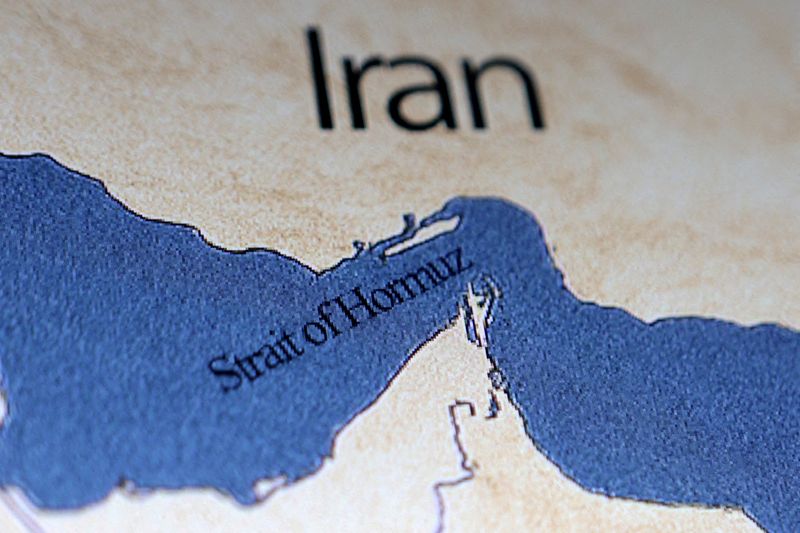
Tehran has already flexed its muscles, attacking airports, ports, oil facilities and commercial centers in six Gulf states with missiles and drones while disrupting shipping in the Strait of Hormuz – which carries about a fifth of the world’s oil and underpins the Gulf economy.
The attacks have heightened concerns in the Gulf that giving Iran any significant offensive weapons or weapons-making capabilities could embolden it to hijack the region’s energy lifeline if tensions escalate.
As the war enters its third week and U.S. and Israeli air strikes intensify and Iran fires on U.S. bases and civilian targets in the Gulf, one Gulf source said the prevailing sentiment among leaders is clear: Trump should reduce Iran’s military capabilities across the board.
The alternative, sources say, is to live under constant threat. He said that unless Iran is severely weakened, it will continue to hold the region to ransom.
Iran, which is predominantly Shia Muslim, often views its Sunni Arab Gulf neighbors — close U.S. allies that host U.S. military bases — with deep suspicion, although relations with Qatar and Oman are generally less fraught.
Iran and its regional allies have been accused of carrying out attacks on Gulf energy facilities for years, notably the 2019 attacks on Saudi Arabia’s Abqaiq and Khurais oil facilities – for which Iran denied responsibility – that halved Saudi output and roiled energy markets.
For Gulf leaders, inaction is now a greater risk.
The impact of Iran’s attacks this month goes well beyond concrete material damage, not only disrupting oil flows but also damaging the hard-won image of stability and security that has underpinned Gulf states’ expansion of trade and tourism and reduced reliance on fossil fuel exports.
“If the Americans withdraw before their mission is completed, we will be fighting Iran alone,” Sager said.
Gulf fears sparking wider war
In response to questions about the concerns, the White House said the United States was “destroying (Iran’s) ability to fire these weapons or produce more” and that Trump was “in close contact with our partners in the Middle East.”
Among Gulf states, only the United Arab Emirates responded. It said it “does not seek to become involved in the conflict or escalate it” but affirmed its authority to “take all necessary measures” to safeguard sovereignty, security and integrity and ensure the safety of residents.
Sources in the region said that no Gulf country would take unilateral military action as only collective intervention could avoid retaliation against individual countries.
Moreover, consensus remains elusive. The six Gulf Cooperation Council members – Bahrain, Kuwait, Qatar, Saudi Arabia, Oman and the United Arab Emirates – have held just one Zoom call and there has been no Arab summit to discuss coordinated action.
Gulf leaders remain deeply concerned about sparking wider, uncontrollable fires.
U.S. Defense Secretary Pete Hegseth said last week that Gulf partners were “amping up their efforts” and willing to “go on the offensive” while already working with Washington on collective and integrated air defense systems, but he did not specify what else they might do.
A senior Emirati official said the United Arab Emirates chose restraint after Iran said the U.S. military used the UAE to attack Khag Island, home to Iran’s main oil export terminal.
However, Saag said that if Iran crosses a red line, especially by attacking major oil facilities or desalination plants or causing heavy casualties, Saudi Arabia, Iran’s main competitor for regional influence, may be forced to retaliate:
“In this case, Saudi Arabia had no choice but to intervene.”
He said Riyadh would still try to adjust any response measures to avoid further escalation.
The strategic dilemma of the Gulf region
Fawaz Gerges of the London School of Economics said that in essence, Arab Gulf states face a strategic dilemma: balancing the immediate threat of an Iranian attack against the greater risk of being drawn into a war led by the United States and Israel.
He said joining the campaign would not increase Washington’s military advantage while significantly increasing the risk of Iranian retaliation. The result was calculated restraint: defending sovereignty and drawing red lines, but not getting involved in wars that the Gulf states neither initiated nor controlled.
Currently, Iran’s influence is evident. It has effectively been deciding which ships can pass through the strait, and no country in the region has deemed this acceptable.
“Now that Iran has shown that it can close the Strait of Hormuz, the Gulf region faces a fundamentally different threat,” said Bernard Haeckel, a professor of Near Eastern studies at Princeton University. “If this problem is not addressed, the danger will be long-term.”
Trump on Sunday called for a national coalition to help reopen the waterway, but initially had little success.
Haeckel argued that while the global economy relies on Gulf oil and gas, much of it flows eastward to China, Japan and other Asian economies, meaning they too must shoulder the responsibility.
“China has helped secure Somali sea lanes; it may also be willing to intervene,” Haeckel said.
(Additional reporting by Alexander Cornwell in Jerusalem and Parisa Hafezi in Dubai; Writing by Samia Nakhoul; Editing by Kevin Liffey)