This month, Asus has updated its ROG gaming laptop range in India ahead of Computex 2025, with Nvidia’s latest GeForce RTX 50 series GPUs. While the focus remains on gaming, the company’s high-end ROG Strix, Zephyrus and Flow series laptops also push AI performance with support from Intel Core Ultra 9 and AMD Ryzen processors. Just like its previous products, the Taiwanese manufacturer makes a point of being the first to bring the latest hardware innovations to the market.
At Computex 2024 in Taipei, Asus was the first to launch the AI-powered Copilot+ laptop series running the Snapdragon X Elite chipset. A year later, the company is seeing increased demand for AI laptops in India as AI computers become more common across segments and price points come down. The response to the company’s new ROG laptop range has also been encouraging, with more than 100 pre-orders registered in the first two weeks of May, which is the company’s highest pre-order count in the past two to three years.
New GeForce RTX 50 Series ROG Laptops
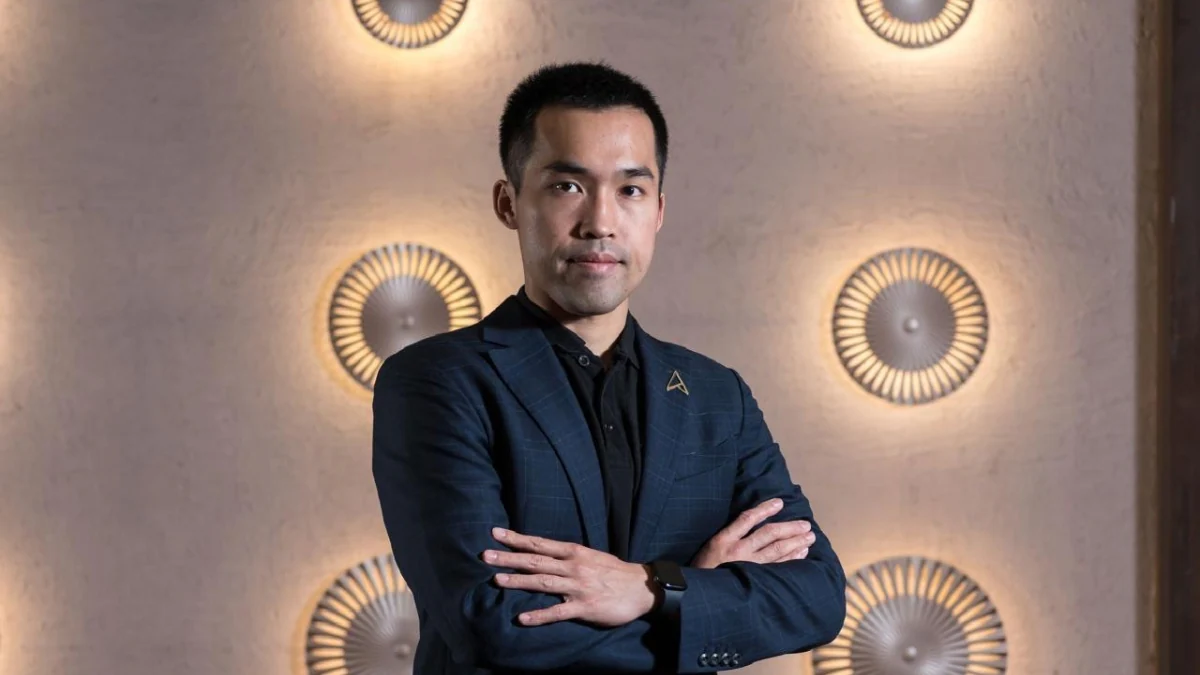
“I think this is a positive sign for ASUS and the gaming industry that end-users are really eagerly waiting for new graphics cards and new chassis to be launched,” Arnold Su, vice president of the company’s consumer and gaming PC business in India, told technology shout after the company refreshed its ROG product line in India earlier this month. In a wide-ranging chat, Su talked about the company’s latest products, its gaming and AI strategy in India, the market’s response to the ROG Ally handheld device, and more.
The Asus executive said that despite a slight decline in overall consumer laptop shipments in 2023 and 2024, India’s graphics card market continues to grow. Su attributes this positive trajectory for the “so-called gaming console” to its versatility. Gamers aren’t the only ones buying gaming laptops. “Maybe 20-30 percent of people use it for content creation or graphics design,” he said.
With the new GeForce RTX 50 series ROG laptops, ASUS first launched high-end models like GeForce RTX 5090, RTX 5080 and RTX 5070Ti on May 2 and received over 100 pre-orders with an average price of around Rs. 250,000. Last week, the company launched ROG Strix, ROG Zephyrus and TUF gaming laptops with entry-level GeForce RTX 5060 laptop GPU, which will be priced under Rs. 200,000. “We don’t want to wait until the entire 50 Series comes out,” Su said. “We feel that now that the premium model is ready in India, we don’t want our premium customers to wait.”
Asus ROG Zephyrus G14 (2025) is priced at Rs. 2,79,999
artificial intelligence computer
With the ROG series, Asus has become the market leader in the gaming PC space in India, but the company has also set ambitious goals in the AI PC space. As demand for AI-powered PCs continues to grow, Asus is trying to differentiate its products in three areas: “everyday AI,” “next-generation AI” and “advanced AI” PCs. “For everyday artificial intelligence, the standard, the benchmark, is 10 TOP (trillions of operations per second, a measure of artificial intelligence performance),” Su said. “Then for the top 45, we call it the next level of AI, equivalent to Microsoft’s Copilot+ PC.”
Finally, ASUS’s high-end advanced AI PCs feature dedicated Nvidia graphics cards (ProArt, ROG and TUF series laptops), delivering up to 321 TOPs. With the demand for AI-powered PCs gradually rising and price points falling, Asus launched the Vivobook 16 Copilot+ PC powered by Snapdragon X-series chipset in February, priced at Rs 100. There are 65,990 users in India – a segment that does not attract daily users.
Su said that as Microsoft adds AI capabilities to its suite of applications, people will start using AI applications on PCs, but currently they are not taking advantage of the full capabilities of the AI NPU.
“If you talk about careers or content creators, for example, if I’m a graphic designer using Adobe, the company is already using artificial intelligence to enhance their software. So maybe if I buy a next-generation AI PC, that might make sense for me,” Su said. “But today, if you ask me, would I recommend that students spend more money to buy a Copilot+ computer? To be honest, I probably wouldn’t suggest it. I would probably say that buying an AI computer for daily use is enough.”
ASUS holds 40% market share in the Indian AI PC segment. Su said that in 2024, AI PCs will account for less than 5% of the company’s consumer laptop shipments. Asus aims to increase AI PC shipment share in China to 10% to 15% by the end of 2025.
ROG Ally X handheld device launched in India last year
What’s next for ASUS ROG Ally
Apart from gaming PCs, Asus has also seen some success in India with its ROG Ally handheld device, despite being a niche piece of hardware. The original Ally was launched in the country in 2023, and Asus launched the ROG Ally X last year. Sales of the handheld console in India have remained stable over the past year, Su said.
“I can give you some numbers. Now, on average, we sell about 400 to 500 units of ROG Ally in India every month. This has been pretty stable over the past almost a year,” he said. This number includes both the ROG Ally and the upgraded ROG Ally X, but the latter’s share is small – about 5% to 10% of the total – due to its higher price.
“If you look at this segment, we only sell 400, 500 units a month, so maybe 6,000, 7,000 units a year. Although I can’t say it’s bad, it hasn’t become a big industry yet,” Su said.
Su did not reveal the company’s plans to launch the next-gen ROG Ally in India, but said Asus will continue to sell the device in the market.
“But we will definitely continue in this segment (in India) because we are seeing 400, 500 units of customers every month and at least we should continue to see how we can find new areas where people want to buy,” he said.
Asus is reportedly working on the next generation of Ally as well as a second handheld device allegedly in partnership with Xbox – “Project Kennan”. Earlier this month, a purported Ally 2 and Xbox-branded handheld surfaced online via a leaked FCC listing. However, Su didn’t reveal any details about what people can expect from the company’s next handheld device. He said that when Asus has news about these devices, people will know about it. “Like all customers, I’m waiting.”