


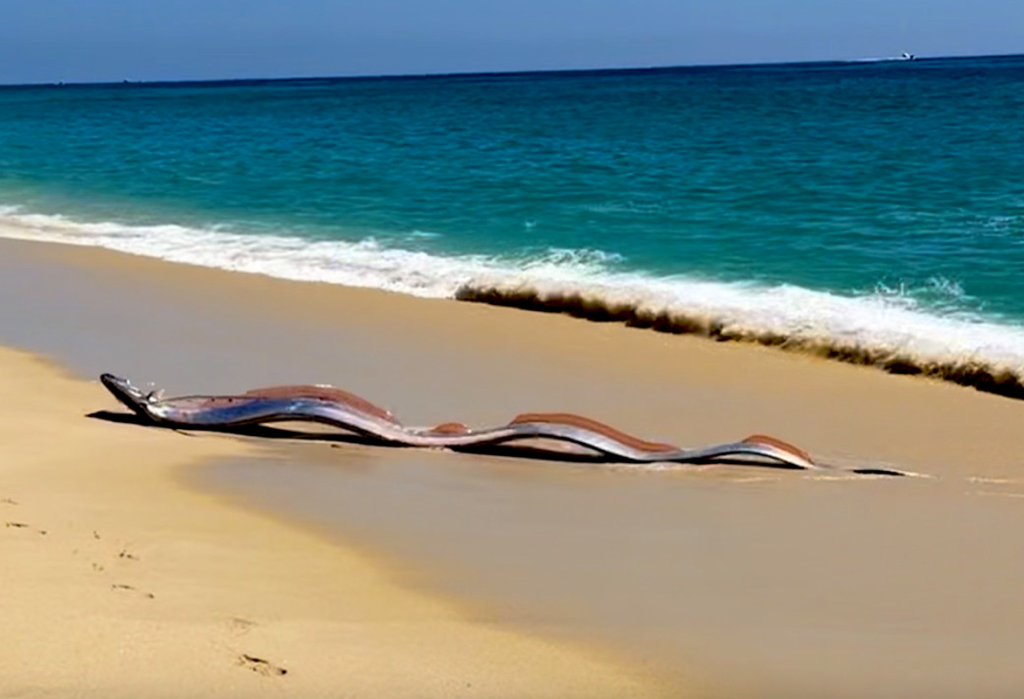
Often called the “doom fish,” the oarfish is a rare sight to humans.
This is because this ribbon-shaped species lives in the deep sea, inhabiting one of the least explored areas of the ocean – the mesopelagic zone, which is about 1,000 meters deep.
But recently, not one, but two oarfish washed ashore in Cabo San Lucas, Baja, Mexico, while a group of tourists were strolling on the beach. Rare indeed. see below.
The video description is as follows:
“A day at Cabo Beach takes an unexpected turn when two sisters spot something strange shimmering in the distance. At first they think it can’t be real.
“As they got closer, they realized the creature struggling in the shallow water was an oarfish, a rare deep-sea species that is almost never seen near the surface. One of the sisters quickly jumped in to help, working with people on the beach to push the fish back into deeper water.
“But this moment got weirder. Just after they helped the first oarfish, they spotted another oarfish near the coast. Even seeing one oarfish is extremely rare. Seeing two oarfish in the same place is almost unheard of.
“Later they learned that they had only been seen a handful of times along this coastline in the past few hundred years. While some have called them ‘doomsday fish,’ scientists say there is no evidence that they are related to earthquakes or tsunamis.”
RELATED: 10-foot ‘doomsday fish’ washes up on shore, cursing San Diego surf town
Oarfish have long been a harbinger of natural disasters, terrifying those who see them washing ashore. For example, according to the Ocean Conservancy:
“Legend has it that if you see an oarfish, it’s a warning sign from a higher power that a disaster like an earthquake is about to happen… Before Japan’s 2011 earthquake, one of the worst disasters in history, a total of 20 oarfish washed ashore.”
However, this sighting in Cabo was not followed by an earthquake or tsunami. Just a good story.
RELATED: Largest Tsunami Ever: Inside the 1,720-Foot Wave (Video)
This article was originally published by Surfer on March 4, 2026 and first appeared in the News section. Click here to add Surfer as a preferred source.