Modern warfare increasingly relies on low-cost drones to perform various tasks, and some countries are developing low-cost defense systems to deal with attacks involving drone swarms. China is one of them, as the country recently detailed the Hurricane 3000, a vehicle-mounted high-power microwave (HPM) weapon that can disable and destroy drones with a range of more than 3 kilometers (1.9 miles). The Hurricane 3000 system complements the existing Hurricane 2000 weapon, a similar HPM that can engage drones at about 2 kilometers (1.2 miles). The United States has a similar counter-drone HPM system called Leonidas, but it only matches the range of the Hurricane 2000.
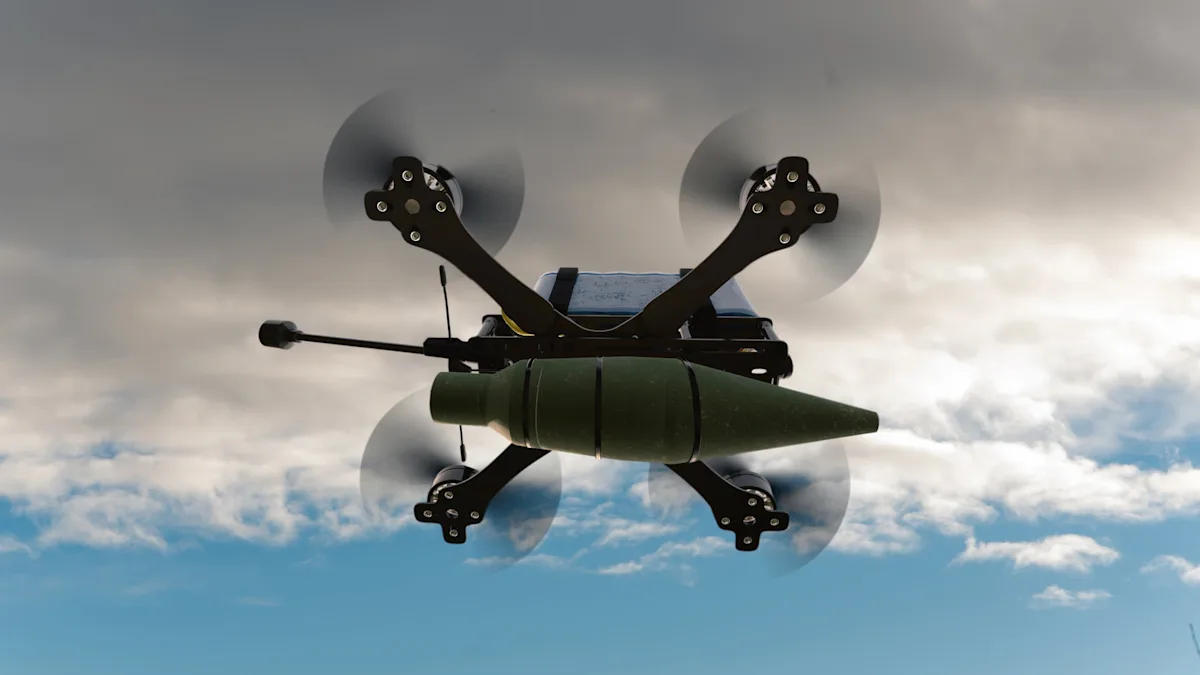
The war in Ukraine is one of the places where drone operations have emerged frequently since the Russian invasion. While both sides have used large numbers of drones, the defense forces have come under scrutiny for some of their drone tactics. Wireless and wired drones are used to observe the battlefield and monitor troop movements. The drones can also be controlled from a distance and used to guide artillery and carry out strikes deep in enemy territory. They can carry explosive warheads or improvised explosive devices.
Incoming drones can be stopped by jamming devices that block wireless communications between pilots and drones. But some drones used in Ukraine are connected to pilots via fiber optic cables. Anti-aircraft weapons and interceptors can also be used to shoot down incoming threats. However, such systems may be more expensive to operate and may be less effective against attacks involving drone swarms. Air defense systems require ammunition, including expensive missiles, while drones are much cheaper. This is where a weapon like the Hurricane 3000 might come in handy.
Read more: What actually happens when a submarine implodes?
How high-power microwave weapons work

There was a swarm of drones parked on the truck. – Goodlifestudio/Getty Images
China’s interest in HPM is not new, as the country has spent more than a decade researching the technology. Popular Science detailed some of these efforts in 2017. At that time, scientists at the Northwest Institute of Nuclear Technology in Xi’an had developed an HPM weapon small enough to be mounted on land vehicles and aircraft. These weapons use similar technology to microwave ovens but, as the HPM abbreviation suggests, are much more powerful. They fire pulses of energy between 300 and 300,000 megahertz at their targets. This energy can overload the drone’s electrical circuits, forcing it to crash land. Higher energy bursts can also cause physical damage to incoming drones.
Since then, China has promoted HPM research. A Reuters report in September 2025 mentioned that China demonstrated a variety of anti-drone defense systems, including HPM weapons, at a military parade commemorating the 80th anniversary of the end of World War II. The report makes no mention of microwave-based systems. China detailed its newly installed Hurricane 3000 in early January. According to TechRadar, the system is manufactured by China North Industries Corporation. The defense contractor said the system is at the forefront of Chinese and international HPM technology.
Unlike anti-aircraft systems that require ammunition, Hurricane 3000 weapons do not require reloading. The system is mounted on the truck and may have its own power supply and cooling system. China North Industries Corporation said the system uses radar to detect incoming air objects and then relies on optical sensors to lock onto the target. Another important advantage is the ability to move trucks out of defense points. The Hurricane 3000 can be used in conjunction with lasers and other anti-drone systems for effective anti-drone defense.
Like this article? Sign up for BGR’s free newsletter and add us as your go-to source for the latest technology and entertainment, as well as tips and advice you’ll actually use.
Read the original article about BGR.