


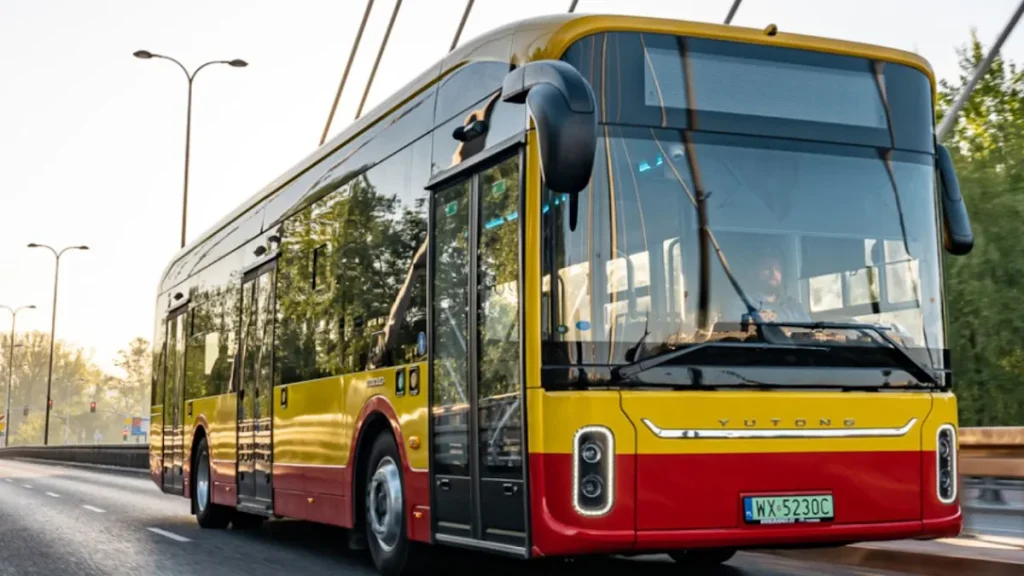
In cities across Australia, fleets of beautiful electric buses quietly transport thousands of commuters every day. But new warnings from cybersecurity experts have turned what once seemed like a clean energy success story into a geopolitical flashpoint.
Officials in Australia and the United Kingdom now say some Chinese-made buses may contain code that theoretically allows the bus manufacturer to shut them down remotely via a so-called “kill switch.”
The revelation has reignited global concerns about foreign-controlled technology embedded in critical infrastructure.
The focus is on pure electric buses manufactured by Yutong. It is a major Chinese manufacturer and its vehicles have been widely purchased by the Australian capital of Canberra and other jurisdictions.
British reports cited tests by the UK National Cyber Security Center and the UK government’s Department for Transport which found that similar models in Europe could be remotely accessed through the manufacturer’s systems, including for diagnostics and software updates. In theory, such access could be used to stop the bus’s drive system.


Image source: Yutong Australia.
It marks a dramatic escalation in cyber risk warnings, which have nothing to do with phone networks or internet routers, but rather public transport vehicles. Transport Canberra has responded by launching a new investigation into cybersecurity risks associated with buses, based on UK analysis and the discovery of functional remote shutdown capabilities during testing by Norwegian transport authorities.
For cyber researchers, the concern is not that Chinese government operators are now flipping the switch in real time, as there have been no confirmed cases of foreign actors actively sabotaging buses. The concern is that this vulnerability does exist for imported vehicles operating on public streets, and in some cases carrying government employees and personnel.
“This is not just a bus issue,” Australian cybersecurity expert Alastair MacGibbon told local media. “It depends on how much control is embedded in the technology we import and whether those controls have the potential to be abused.”
too close to home

Image source: Yutong Australia.
This incident in neighboring Australia (and we mean ally) reads like a vindication of U.S. policymakers who have long sounded the alarm about reliance on Chinese technology.
Transport Secretary Sean Duffy and other hardliners have repeatedly claimed that China-linked vehicles and connected technology pose unacceptable security risks, even saying China should no way Cars (or similarly connected vehicles) can be sold on U.S. roads “as long as there’s breath in me.”
While those comments were dismissed as bluster by critics, Australia’s “kill switch” story suddenly gave them a concrete, globally reported event to point to.
In Washington, the Biden administration has tightened restrictions on connected vehicles containing Chinese software or hardware, setting new rules aimed at banning such imports by 2027 — a response to the national security vulnerabilities highlighted by the Australian case.

Image source: Yutong Australia.
Opponents of these policies argue that connectivity features, including remote diagnostics and over-the-air updates, are standard in the global automotive and transportation industry and are not unique to Chinese manufacturers.
In fact, any modern vehicle with an Internet connection can theoretically be accessed remotely, whether it’s built in Beijing, Detroit, or Tokyo. Chinese critics have warned global media that the U.S. ban could backfire by increasing costs and supply chain challenges for U.S. automakers that rely on global parts.
But for many U.S. national security experts, the decisive issue is not just connectivity but control. If a foreign company can access the mission-critical systems of vehicles operating on public streets—or the energy grids, solar inverters, or artificial intelligence systems that underpin modern life—that access becomes leverage that adversaries can exploit during a crisis.
Global security, local streets
The incident in Australia has triggered an official review of every Yutong model in service. Canberra Transport officials insist there are no direct operational issues based on current investigations and that local buses are updated through physical service centers rather than remote connections.
But the warning has reverberations wider, from London to Canberra, Oslo to Washington: As countries electrify their transport fleets and adopt connected vehicles, they must also consider who controls that connectivity.
For U.S. lawmakers who have loudly warned — prematurely, in the eyes of some — that Chinese wheel technology is more than just another import, this moment may well feel like a long-awaited reckoning.
Source: ABC, afr.com