


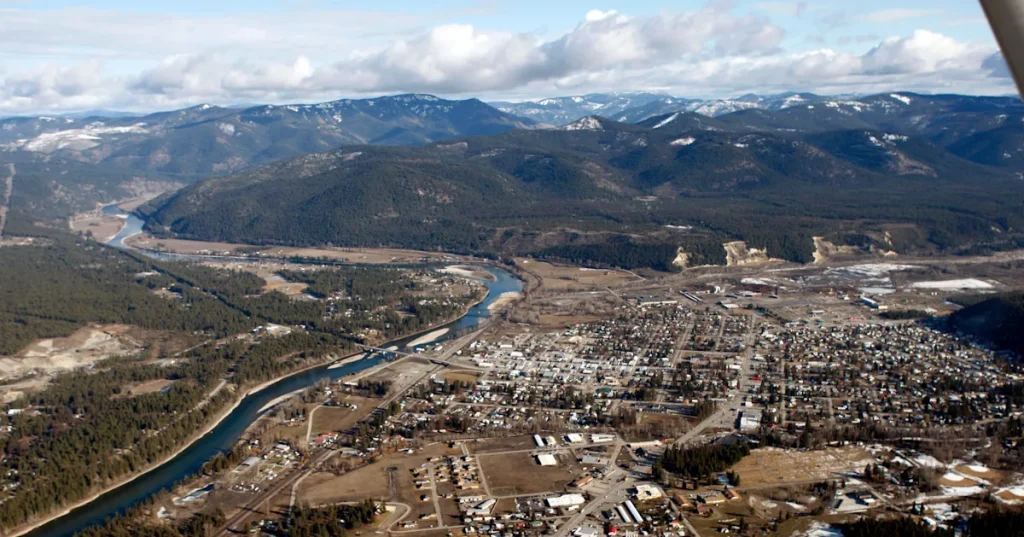
BILLINGS, Mont. (AP) — A federal appeals court has overturned a judge’s ruling that the BNSF railroad killed two people in a Montana mining town where thousands were sickened by asbestos exposure.
After a civil trial, a jury in 2024 awarded estates of $4 million to each of the two people who died in 2020. Their families accuse the railroad of allowing asbestos-contaminated mining materials to pile up at the railroad yard in downtown Libby, Montana.
But the U.S. Court of Appeals for the Ninth Circuit sided with BNSF in an opinion issued Tuesday, saying the company was required by law to accept the vermiculite material for shipment and be informed that it was safe.
The case in Helena, Montana, is the first of many lawsuits brought to trial against the Texas-based railroad over its past operations in Libby. Current and former residents of the town near the U.S.-Canada border want BNSF held accountable for alleged asbestos exposure that health officials say has killed hundreds and sickened thousands.
U.S. District Judge Brian Morris instructed a Helena jury that it could find the railroad negligent based on its conduct at the Libby Railyard. The jury did not find that BNSF acted intentionally or with indifference and therefore did not award punitive damages.
The vermiculite mined in Libby contains high concentrations of natural asbestos. It is used for insulation and other commercial purposes in homes and businesses across the country.
After being extracted from the hilltops outside the city, the material was loaded onto train cars, the contents of which sometimes spilled into the Libby rail yard. Residents described piles of vermiculite stacked in yards and factory dust blowing through downtown Libby.
Warren Buffett’s Berkshire Hathaway Inc. acquired BNSF in 2010, two decades after the vermiculite mine near Libby closed and stopped shipping the contaminated mineral.
Looming in the lawsuit is WR Grace & Co., a chemical company that operated a mountaintop vermiculite mine 7 miles (11 kilometers) outside Libby until it closed in 1990. The Maryland-based company played a central role in Libby’s tragedy and paid significant compensation to victims but avoided taking greater responsibility after declaring bankruptcy.
BNSF’s attorneys said WR Grace representatives repeatedly told the railroad that products shipped through Libby were safe.
In 2005, federal prosecutors brought criminal charges against WR Grace and company executives over pollution issues. A jury acquitted them after a 2009 trial.
The Environmental Protection Agency cracked down on Libby in 1999 after news reports of illnesses and deaths among miners and their families. In 2009, the agency declared the nation’s first public health emergency in Libby under the federal Superfund cleanup program.